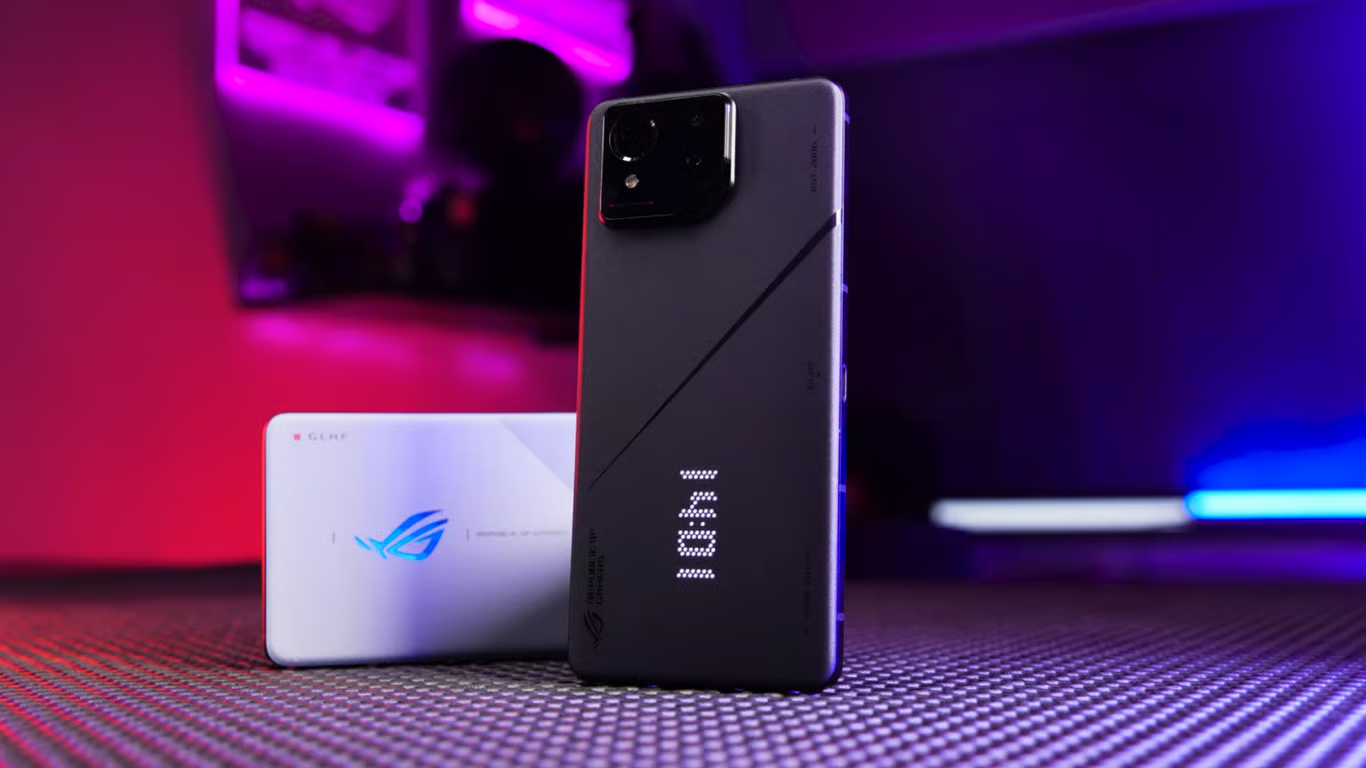
In a notable strategic shift, ASUS has confirmed that it will pause launching new smartphones in 2026, including its popular Zenfone and ROG Phone lines, signaling a potential pivot away from the fiercely competitive smartphone market toward AI‑driven hardware and robotics. Reports from Taiwanese distributors and ASUS’s own statements indicate that while existing devices will continue to receive after‑sales support, warranty coverage, and software updates, no new models are slated for release this year. ASUS’s leadership has explicitly tied this decision to not only challenging market conditions — including rising memory and component costs — but also to the company’s broader focus on long‑term growth areas such as AI servers, robotics, edge computing, and integrated AI platforms. This move could mark the beginning of a sustained transformation in ASUS’s product portfolio, prioritizing AI solutions and computing innovation over traditional consumer handsets.
1. Current State of the Trend: Stagnation and Strategic Shifts
ASUS’s smartphone pause occurs against a backdrop of broader industry pressures:
Market saturation and consolidation: The global smartphone market has matured, with major players like Samsung, Apple, and Xiaomi dominating unit shipments, leaving niche brands with limited share and pricing power.
Component cost inflation: Rising prices for DRAM and NAND flash have eroded margins in an already tight segment, making high‑end, margin‑sensitive devices harder to justify.
AI and computing priority: ASUS, historically strong in PC components and gaming hardware, is increasingly emphasizing AI PCs, edge AI solutions, and robotics, which promise higher growth and differentiation than smartphones.
Within this context, ASUS’s announcement that it will not introduce new phones in 2026 — even as it maintains support for existing devices — signals a strategic prioritization of investment and R&D toward AI and AI‑centric systems.
2. How We Got Here: A Brief History
Early Smartphone Era (2010s)
ASUS entered the smartphone landscape with Zenfone models and later expanded into gaming‑oriented devices with the ROG Phone series. These phones attracted niche followings for innovative design and gaming performance, though they never captured large market share globally.
Mid‑2010s to Early 2020s: Consolidation
While ASUS continued releasing phones, the broader Android ecosystem saw aggressive consolidation. Industry giants invested heavily in flagship and mid‑range segments, while smaller players struggled to maintain visibility and profitability.
Late 2020s: Component Economics and AI Opportunities
By 2024–25, global memory markets experienced volatility, making cost management in smartphones even more difficult. Meanwhile, AI computing demand surged — from generative AI PCs to edge inference systems and robotics — opening new growth avenues within ASUS’s existing strengths (AI PCs, gaming hardware, enterprise systems). Contemporary press released ASUS’s initiatives like its Sovereign AI services and professional AI solutions, showing a structural shift toward enterprise‑grade AI hardware.
2025–2026: Strategic Pivot
The recent confirmation that ASUS will not launch new phones in 2026 reflects this broader shift: the company is reallocating resources to AI, robotics, and enterprise solutions, where growth potential outpaces diminishing smartphone margins.
3. Key Players and Their Strategies
In this strategic landscape, ASUS is not alone. Here’s how key hardware players are positioning:
ASUS
New focus: AI-driven hardware (AI servers, robotics, edge AI systems)
Existing strength: PCs, gaming hardware, AIoT solutions
Smartphone stance: Pause phone launches, maintain support
Apple
Samsung
Xiaomi and Oppo
Niche OEMs
Many smaller Android vendors have already exited or reduced phone ambitions, focusing instead on IoT, smart home products, and AI‑assisted services.
ASUS’s shift reflects a broader realignment where AI and computing platforms offer clearer paths to differentiated value than traditional smartphones, especially amid competitive pressure and cost headwinds.
4. Data and Statistics Showing Adoption/Growth
While ASUS itself hasn’t released detailed numbers, broader industry trends give context:
The global smartphone market growth has plateaued, with major vendors capturing the lion’s share of shipments and smaller brands losing share.
AI PC and enterprise hardware markets are projected to grow faster — as AI use cases expand from data centers to edge and enterprise applications.
Component price volatility has impacted profit margins, pushing OEMs to optimize portfolios.
This macro data environment helps explain why ASUS’s leadership would prioritize AI solutions and high‑growth hardware platforms over the shrinking smartphone segment.
5. Real‑World Examples and Case Studies
ASUS’s AI Computing Push
ASUS has shown significant innovation in edge AI and industrial AI systems, showcasing products like high‑performance edge AI computers tailored for autonomous vehicles and real‑time analytics, reflecting a clear turn toward hardware that complements AI workloads.
Zenfone 12 Ultra and ROG Phone Lines
The Zenfone 12 Ultra — ASUS’s flagship for 2025 — and the ROG Phone 9 series represented the company’s last major pushes in phones, including AI features like camera and productivity‑oriented enhancements. These represented the culmination of the brand’s smartphone engineering but struggled to maintain market momentum.
6. Benefits and Challenges of the Pivot
Benefits
Resource reallocation: ASUS can invest engineering and R&D capital into AI systems with potentially higher margins.
Market differentiation: By focusing on AI servers, robotics, and edge infrastructure, ASUS can carve out niches less crowded than smartphones.
Leverage core strengths: ASUS’s heritage in PC components and AIoT positions it to benefit from AI‑driven demand.
Challenges
Brand perception: ASUS has a loyal base of smartphone enthusiasts who may feel abandoned.
Market transition risk: Moving from consumer devices to enterprise AI hardware requires different go‑to‑market models and longer sales cycles.
Revenue replacement: Smartphones, while low growth, still contribute sales; replacing that revenue reliably with AI products will take time.
7. Expert Perspectives and Predictions
Industry analysts might frame ASUS’s move as part of a wider realignment around AI and high‑performance computing. As AI workloads distribute across edge, cloud, and enterprise systems, hardware vendors are assessing where profitable growth lies.
Experts may predict:
Temporary hiatus vs permanent shift: ASUS might revisit the smartphone segment if AI market conditions or component cost structures improve — but the 2026 pause could become longer if AI investments pay off.
Broader industry consolidation: Smaller phone brands will continue ceding ground to dominant players.
AI as a strategic inflection point: Companies with hardware roots like ASUS are accelerating into AI systems to remain relevant in next‑generation computing.
8. What This Means for Average Users vs Professionals
Average Users
No immediate impact on support: ASUS will continue software updates and warranty services.
Brand choices narrow: Users who enjoyed ASUS’s distinctive phones will need to look elsewhere for future device upgrades.
Technology Enthusiasts
Professionals & Enterprise Buyers
Developers and AI Ecosystem
9. How to Prepare or Take Advantage
For Users
For Tech Enthusiasts
For Professionals
10. Future Outlook and Timeline
2026
ASUS halts new phone launches, reallocates development.
AI servers, robotics hardware, and edge AI solutions increase in company focus.
2027–2028
ASUS’s AI portfolio matures, potentially driving double‑digit growth in enterprise segments.
Smartphone pause could become permanent unless market conditions drastically improve.
2030 and Beyond
If AI hardware expansion continues successfully, ASUS may emerge more as a compute‑first brand rather than a mobile device maker, signaling a broader industry shift away from saturated consumer hardware categories to differentiated AI‑centric systems.
Conclusion
ASUS’s decision to pause smartphone launches in 2026 is not an isolated anomaly — it is symptomatic of deeper shifts in global technology markets. Smartphones, once the centerpiece of consumer hardware strategy, are increasingly commoditized and margin‑constrained. In contrast, AI and AI‑driven hardware, from servers to edge systems, present expansive opportunities for innovation, performance differentiation, and long‑term growth.
By reallocating resources toward AI, robotics, and integrated computing platforms, ASUS is not simply stepping back from phones — it is making a forward‑looking strategic bet on where value creation will occur in the decade ahead.
For users, professionals, and partners alike, this pivot invites reflection on where hardware innovation will reside next — and how companies with heritage in silicon, design, and engineering will shape that future.