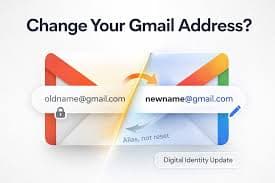
After years of user frustration, Google has begun allowing users to change their Gmail address without creating a brand-new account or losing their data. While the feature is rolling out with limitations — and not all users may get full username replacement immediately — it marks a fundamental shift in how Google treats email identity. For most of Gmail’s history, your address was effectively permanent: choose poorly once, and you lived with it forever.
This update allows eligible users to modify or transition their Gmail address while keeping their Google account, inbox history, subscriptions, and connected services intact. The change reflects Google’s acknowledgment that email addresses are no longer just communication tools, but lifelong digital identities tied to banking, cloud storage, work, authentication, and personal branding.
While not every Gmail user can yet fully rename their primary address, the wall has cracked — and that alone is historic.
Broader Context: Why This Matters Now
Email Has Become Digital Identity
When Gmail launched in 2004, email was mostly about messages. Today, a Gmail address is:
Locking users into a single address made sense when email was lightweight. It makes far less sense in an era where digital identity evolves.
People change:
Yet Gmail froze users in time, forcing millions to either:
Live with embarrassing usernames
Maintain multiple accounts
Or abandon old inboxes entirely
Google’s change reflects a deeper recognition: identity permanence is no longer realistic.
Why Google Resisted This for So Long
From a technical and strategic standpoint, Gmail usernames were never “just names.”
1. Gmail Addresses Are Primary Keys
Internally, email addresses were deeply embedded as unique identifiers across:
Authentication systems
Google Workspace
Third-party logins
Security logs
Compliance records
Allowing changes risked:
Account confusion
Security loopholes
Broken integrations
2. Anti-Fraud and Trust Concerns
Email stability helps:
Changing addresses introduces risks if not tightly controlled.
3. Platform Inertia
Gmail’s scale (billions of users) made any structural change slow, risky, and expensive. Google prioritized stability over flexibility — until user pressure and industry shifts forced reconsideration.
Why Google Is Making This Move Now
This change is not happening in isolation. Several forces converged:
1. Identity Flexibility Is Becoming a Competitive Feature
Platforms increasingly allow:
Username changes
Display name evolution
Identity separation
Rigid identity systems feel outdated — and user-hostile.
2. Increased Focus on Privacy and Personal Safety
Many users want to:
Detach old usernames linked to data leaks
Separate personal and professional identities
Reduce long-term digital footprints
A permanent email address works against modern privacy norms.
3. Pressure from Younger Users
Gen Z treats digital identity as fluid, not fixed. Platforms that don’t adapt risk losing relevance.
4. Google’s Shift Toward Account-Centric Architecture
Google accounts are increasingly ID-based internally, with email becoming a mutable attribute — not the core identifier. This architectural shift makes change possible.
What Makes This Different from the Past (and Competitors)
Before: Email = Account
Your Gmail address was your account.
Now: Account > Email
Google is signaling that:
This mirrors:
But Google is doing it at a far larger consumer scale.
Implications for Users
1. Personal Users
Freedom to fix old usernames
Ability to adapt identity over time
Reduced need for multiple Gmail accounts
2. Professionals & Freelancers
Align email identity with career evolution
Cleaner branding without inbox migration
Reduced risk of missed client communications
3. Marginalized and Vulnerable Users
Safer identity transitions
Less exposure from legacy usernames
Better control over digital footprints
4. Long-Time Gmail Power Users
Industry Implications
Email Providers Will Face Pressure
Once Gmail allows change, competitors that don’t will appear outdated.
Authentication Systems Must Adapt
Email-based login systems will increasingly need:
Reduced Account Proliferation
Fewer “throwaway” or secondary accounts means:
Comparison to Similar Moves by Other Companies
Microsoft Outlook
Has long supported aliases
Allows sending/receiving from multiple addresses
Still complex for average users
Apple
Social Platforms
Google was an outlier — until now.
Potential Problems and Criticisms
1. Limited Rollout
If only certain users can change addresses:
Frustration will persist
Confusion may increase
2. Impersonation Risks
Address recycling must be handled carefully to prevent:
Account spoofing
Reputation abuse
3. Email Continuity Confusion
Contacts may:
4. Enterprise Complications
For Workspace users, identity changes affect:
Compliance
Archiving
Legal discovery
Google must balance flexibility with institutional trust.
Price-to-Value (Even Though Gmail Is “Free”)
This change significantly increases Gmail’s value:
For Google, the ROI is retention, trust, and reduced churn — not direct revenue.
Strategic Commentary: Why This Is a Smart Move
Google is quietly correcting a long-standing UX debt.
Rather than forcing users to adapt to infrastructure, Google is adapting infrastructure to users — a philosophical shift that mirrors broader changes across Big Tech.
This also aligns with:
In simple terms: Google is future-proofing Gmail.
What This Means for Different User Segments
User TypeImpactCasual usersLess anxiety about early mistakesProfessionalsCleaner brandingPrivacy-focused usersBetter controlLong-term usersStronger loyaltyEnterprisesMore complexity, but more flexibility
Historical Context: Gmail’s Evolution
2004–2010: Email as novelty
2010–2018: Email as platform backbone
2018–2024: Email as identity and authentication core
2025+: Email as a mutable identity layer
This change marks Gmail’s transition into its fourth era.
Predictions: What Comes Next
Full Alias-First Gmail Accounts
Temporary or Role-Based Addresses
Deeper Separation Between Login ID and Public Email
Better Identity Portability Across Google Services
Longer term, email itself may become less visible — with AI assistants and identity layers sitting on top.
Final Thoughts
Letting users change their Gmail address may sound minor, but it represents a fundamental shift in how Google views identity, permanence, and user autonomy.
For nearly 20 years, Gmail taught users to live with their past. This change acknowledges something more human: people evolve, and digital identity should evolve with them.
It’s not just an overdue feature.
It’s a signal that the era of fixed digital identities is ending — and Gmail is finally catching up to the world it helped create.