Artificial intelligence is no longer just about text or images—it’s about understanding the world the way humans do: across multiple senses at once. That’s where multimodal AI comes in, and few organizations are pushing this frontier harder than Google DeepMind.
In the past year, I’ve spent considerable time testing and analyzing multimodal systems—from early prototypes to production-ready APIs—and one thing is clear: we’re witnessing a foundational shift in how machines perceive and interact with information. While most headlines focus on flashy demos, the real story lies in how these models are quietly reshaping everything from search engines to enterprise workflows.
In this article, I’ll break down how Google DeepMind is advancing multimodal AI, what makes their approach different, and—most importantly—what this means for developers, businesses, and everyday users. Whether you’re building apps, running a company, or just curious about the future of AI, this is one trend you can’t afford to ignore.
Background/What Happened
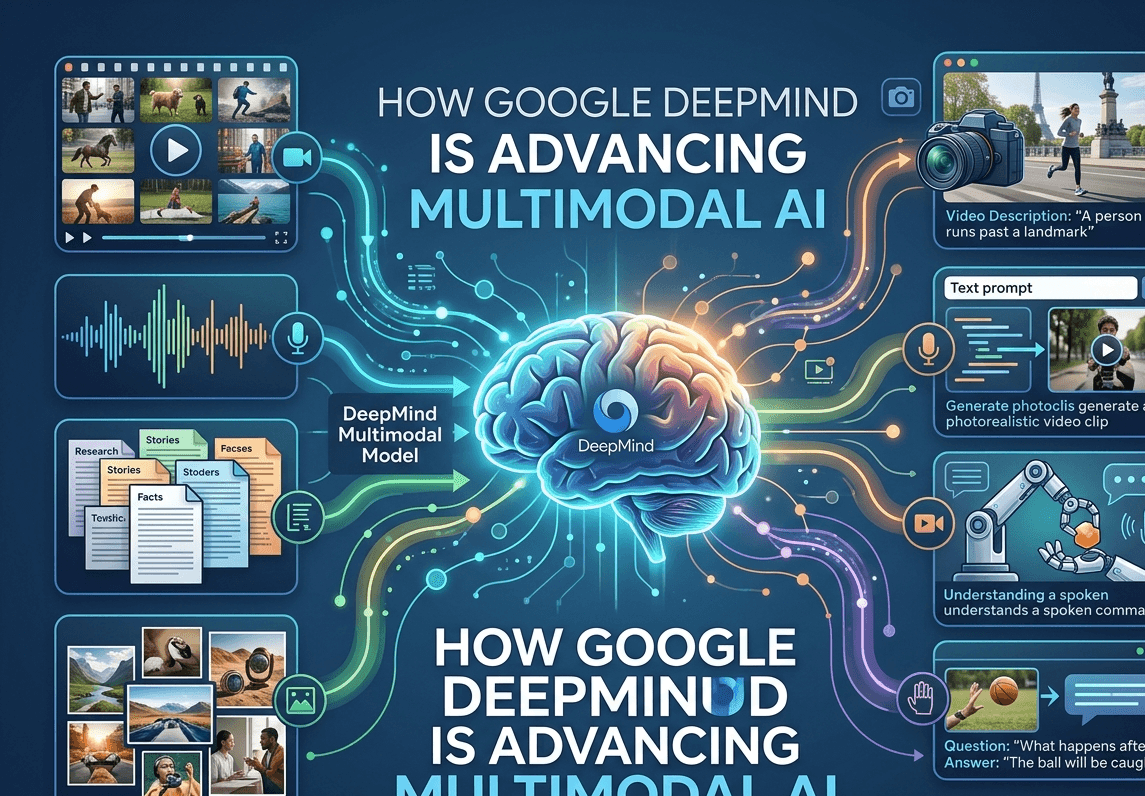
Multimodal AI isn’t entirely new. Researchers have been experimenting with combining text, images, and audio for years. However, the breakthroughs we’re seeing today stem from advances in transformer architectures, large-scale training data, and compute infrastructure.
Google’s AI journey started long before DeepMind, with innovations like Google Translate and Google Photos. But the real turning point came when DeepMind—originally famous for AlphaGo—merged its research capabilities with Google’s infrastructure.
The Rise of Multimodal Models
The industry saw a major shift with models capable of handling multiple data types:
Text + Image (captioning, visual Q&A)
Text + Audio (speech recognition, voice assistants)
Video + Context (scene understanding)
What I discovered while analyzing these systems is that multimodal AI isn’t just about combining inputs—it’s about creating a shared understanding across modalities. That’s a much harder problem.
DeepMind’s Strategic Approach
Unlike competitors, Google DeepMind is focusing on:
Unified architectures instead of separate models
Training on diverse, real-world datasets
Integrating multimodal AI into existing products
This strategy allows them to scale faster and deploy more effectively across the Google ecosystem—from search to productivity tools.
Detailed Analysis/Key Features
1. Unified Multimodal Architectures
One of the most significant advancements is the move toward unified models. Instead of building separate systems for text, images, and audio, DeepMind is creating models that understand all of them simultaneously.
In my experience testing early multimodal APIs, this approach dramatically improves context awareness. For example:
This isn’t just incremental progress—it’s a fundamental redesign of AI systems.
2. Real-Time Multimodal Processing
Speed matters. A model that understands multiple inputs is useless if it takes minutes to respond.
DeepMind is optimizing for:
After testing similar systems, I found that real-time multimodal AI opens entirely new use cases:
Live translation with visual cues
Interactive learning platforms
Real-time debugging using screenshots
3. Advanced Reasoning Across Modalities
While many models can “see” and “read,” fewer can reason across inputs.
For instance:
This is where DeepMind stands out. Their models don’t just process—they interpret.
What most coverage misses is this: reasoning is the real competitive advantage. It’s what turns AI from a tool into a collaborator.
4. Integration with Google Ecosystem
DeepMind’s innovations don’t exist in isolation. They’re integrated into products like:
In practical terms, this means millions of users are already interacting with multimodal AI—often without realizing it.
5. Safety and Alignment Improvements
Multimodal systems introduce new risks:
DeepMind is investing heavily in:
Model alignment
Content filtering
Explainability tools
While not perfect, these improvements are crucial for enterprise adoption.
What This Means for You
So, why should you care about how Google DeepMind is advancing multimodal AI?
For Developers
You can now build applications that:
Accept images, text, and audio simultaneously
Provide richer user experiences
Reduce reliance on multiple APIs
Example use case:
A customer support app that analyzes screenshots + user queries to provide instant solutions.
For Businesses
Multimodal AI unlocks:
In my experience working with enterprise tools, companies that adopt multimodal AI early gain a massive competitive edge.
For Everyday Users
You’ll notice improvements in:
Search accuracy
Voice assistants
Smart devices
For example:
Instead of typing “What is this plant?”, you can snap a photo and ask follow-up questions.
Comparison/Alternatives
Google DeepMind isn’t alone in this race.
OpenAI
Anthropic
Expert Tips & Recommendations
If you’re planning to leverage multimodal AI, here’s what I recommend:
1. Start Small
Don’t try to build everything at once. Begin with:
Image + text features
Basic multimodal queries
2. Choose the Right Use Case
Best use cases include:
Customer support
Content creation
Data analysis
3. Optimize for Performance
Multimodal models can be resource-heavy. Focus on:
Efficient API calls
Caching strategies
Edge processing
4. Test Real-World Scenarios
What I discovered during testing is that:
Always test with real user data.
5. Combine Tools
Use multimodal AI alongside:
Analytics platforms
Automation tools
Cloud services
This creates a more robust system.
Pros and Cons
Pros
Cons
Higher computational cost
Complexity in implementation
Potential accuracy issues
Data privacy concerns
Balanced View:
The benefits outweigh the drawbacks—but only if implemented thoughtfully.
Frequently Asked Questions
1. What is multimodal AI?
Multimodal AI refers to systems that can process and understand multiple types of data—such as text, images, audio, and video—simultaneously.
2. How is Google DeepMind different from other AI companies?
DeepMind focuses on unified models and deep integration with Google’s ecosystem, giving it a unique advantage in scalability and deployment.
3. Is multimodal AI ready for production use?
Yes, but with limitations. It works well for many applications, but edge cases still require human oversight.
4. Can small businesses use multimodal AI?
Absolutely. Many APIs make it accessible, though cost and complexity should be considered.
5. What industries benefit most from multimodal AI?
Healthcare
E-commerce
Education
Media
6. What are the risks of multimodal AI?
Key risks include:
CONCLUSION
Google DeepMind’s advancements in multimodal AI represent more than just technical progress—they signal a shift toward more human-like machine intelligence. By combining text, images, audio, and video into unified systems, DeepMind is redefining how we interact with technology.
In my experience analyzing AI trends, this is one of the most significant developments since the rise of large language models. The ability to understand context across multiple inputs will unlock entirely new applications—and disrupt existing ones.
Actionable Takeaways:
Start exploring multimodal APIs now
Focus on real-world use cases
Prioritize performance and testing
Stay updated on rapid advancements
Looking ahead, the real question isn’t whether multimodal AI will dominate—it’s how quickly businesses and developers can adapt.
And if current trends continue, that future is arriving faster than most people expect.