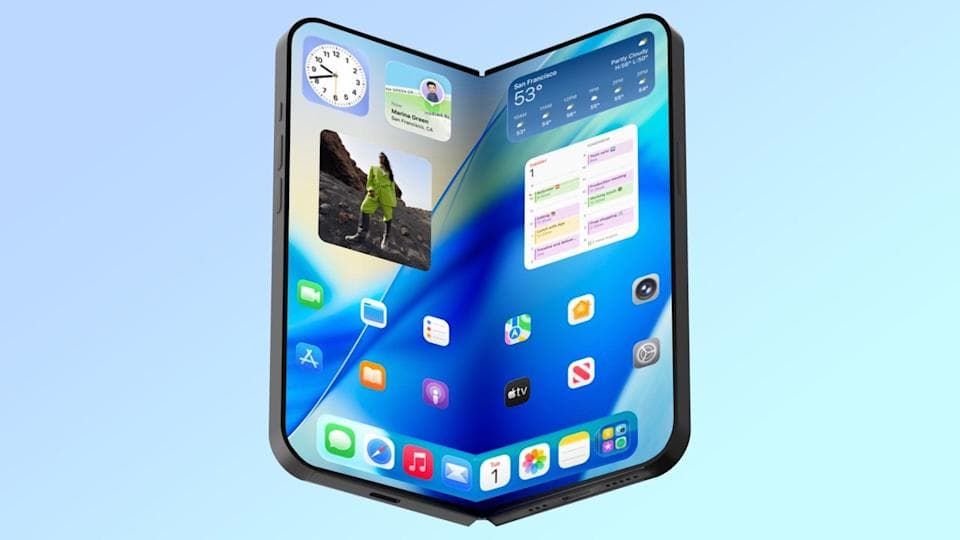
Apple is widely expected to enter the foldable smartphone market with its first foldable iPhone, potentially launching in the next product cycle. Leaks and supply-chain signals suggest Apple is experimenting with multiple form factors, advanced hinge mechanisms, and display technologies aimed at eliminating visible creases—one of the biggest pain points of current foldables. Rather than rushing to market, Apple appears to be taking a methodical approach, focusing on durability, user experience, and software integration before committing to mass production.
This move comes after years of foldable experimentation by rivals like Samsung, Huawei, and Google. Apple’s entry signals not just another foldable phone, but a potential redefinition of how foldable devices fit into mainstream smartphone usage.
The Broader Context: Why Apple’s Foldable Matters
Apple’s foldable iPhone matters not because it’s first—but because it’s late.
Historically, Apple rarely pioneers new hardware categories. Instead, it waits until:
Component costs stabilize
Consumer use cases become clear
Technology matures enough to meet Apple’s quality standards
This pattern was evident with smartphones, tablets, smartwatches, and even wireless earbuds. Foldables today still struggle with durability concerns, inconsistent software optimization, and unclear value propositions for mainstream users. Apple’s hesitation suggests it believes foldables haven’t yet met the threshold required for mass adoption.
A foldable iPhone, therefore, isn’t just a new device—it’s Apple’s implicit endorsement that foldables are finally ready for the mainstream.
Historical Context: Apple and “Late” Innovation
Apple’s strategy of entering late but redefining categories is well-documented:
Smartphones existed before the iPhone
Tablets existed before the iPad
Smartwatches existed before Apple Watch
In each case, Apple:
Simplified the user experience
Unified hardware and software
Built a developer ecosystem around new interactions
Foldables today resemble early smartphones: impressive demos, limited real-world necessity. Apple’s involvement signals the category may be approaching its “iPhone moment.”
What Makes Apple’s Foldable Approach Different
Hardware Philosophy: Durability Over Novelty
Apple reportedly prioritizes:
Minimal or invisible screen creases
Reinforced hinge mechanisms
Long-term reliability over thinness
This contrasts with competitors who prioritized form factor innovation and speed-to-market.
Software-First Design
Apple’s biggest advantage lies in iOS:
Deep control over UI scaling
Seamless app continuity between folded and unfolded states
Predictable developer behavior through strict guidelines
Rather than adapting apps post-launch, Apple is likely designing the OS experience alongside the hardware.
Implications for Users
Mainstream Consumers
For everyday users, Apple’s foldable could:
Replace both phone and small tablet
Offer multitasking without complexity
Reduce the learning curve seen in Android foldables
Apple’s focus will likely be on “it just works” rather than showcasing advanced power-user features.
Professionals and Creators
For professionals, a foldable iPhone could:
Enable portable document editing
Improve mobile productivity workflows
Bridge the gap between iPhone and iPad
However, Apple may intentionally limit overlap with iPads to avoid cannibalization.
Early Adopters
Apple’s foldable may feel conservative compared to experimental Android models—but it will likely be more stable and long-lasting.
Industry Impact: Why Competitors Should Be Worried
Pressure on Android Foldables
Samsung and others dominate foldables today, but Apple’s entry could:
Reset user expectations around durability
Force competitors to improve software polish
Shift foldables from niche to mainstream
If Apple nails reliability and usability, Android foldables may suddenly feel unfinished by comparison.
Supply Chain Disruption
Apple’s scale could:
Drive down foldable display costs
Accelerate innovation in hinges and materials
Lock up premium component supply
This could disadvantage smaller manufacturers.
Comparison to Similar Moves by Other Companies
Samsung’s Early-Mover Advantage
Samsung deserves credit for building the foldable market—but early models faced:
Apple benefits from learning from these mistakes without paying the reputational cost.
Google’s Software-Led Approach
Google’s foldables emphasize software intelligence. Apple’s advantage lies in tighter ecosystem control, allowing it to deliver consistency rather than experimentation.
Potential Problems and Criticisms
Price Concerns
Apple’s foldable iPhone is almost guaranteed to be expensive. This raises concerns about:
Accessibility
Value justification
Market reach
High pricing could limit adoption to premium users.
Cannibalization Risk
A foldable iPhone risks overlapping with:
Apple must carefully position the device to avoid undermining its own lineup.
Conservative Innovation
Critics may argue Apple is playing it too safe, delivering a foldable that feels less ambitious than competitors.
Strategic Analysis: Why Apple Is Moving Now
Apple’s timing likely reflects several converging factors:
Foldable display yields improving
Consumer awareness increasing
Competitive pressure from Android ecosystems
Maturity of mobile multitasking expectations
Strategically, Apple appears to see foldables as the next evolutionary step—not a radical leap.
Predictions: What Happens Next
Short-Term (1–2 Years)
Medium-Term (3–5 Years)
Long-Term
Foldables may replace “Plus” or “Max” models entirely, becoming the default premium iPhone design.
What This Means for Different User Segments
Casual users: Likely to wait for second-generation models
Professionals: May adopt early for productivity gains
Developers: Must rethink app layouts and interactions
Enterprise users: Could benefit from secure, portable multitasking
Expert Commentary: The Bigger Picture
From a strategic perspective, Apple’s foldable iPhone is less about bending screens and more about bending expectations. Apple isn’t trying to win the foldable race—it’s trying to end it by defining what “good enough” finally looks like.
If Apple succeeds, foldables will no longer be seen as experimental gadgets. They’ll become the next logical step in smartphone evolution.
If it fails, it won’t be because the technology wasn’t ready—but because Apple misjudged how much users actually want their phones to change.
Conclusion: A Calculated Bet, Not a Gamble
Everything we know so far about Apple’s foldable iPhone suggests a company acting with caution, confidence, and long-term intent. This isn’t a reactionary product—it’s a strategic statement.
Apple doesn’t need to prove foldables are possible.
It needs to prove they’re worth it.
And if history is any guide, when Apple finally commits, it’s not just entering a category—it’s preparing to reshape it.