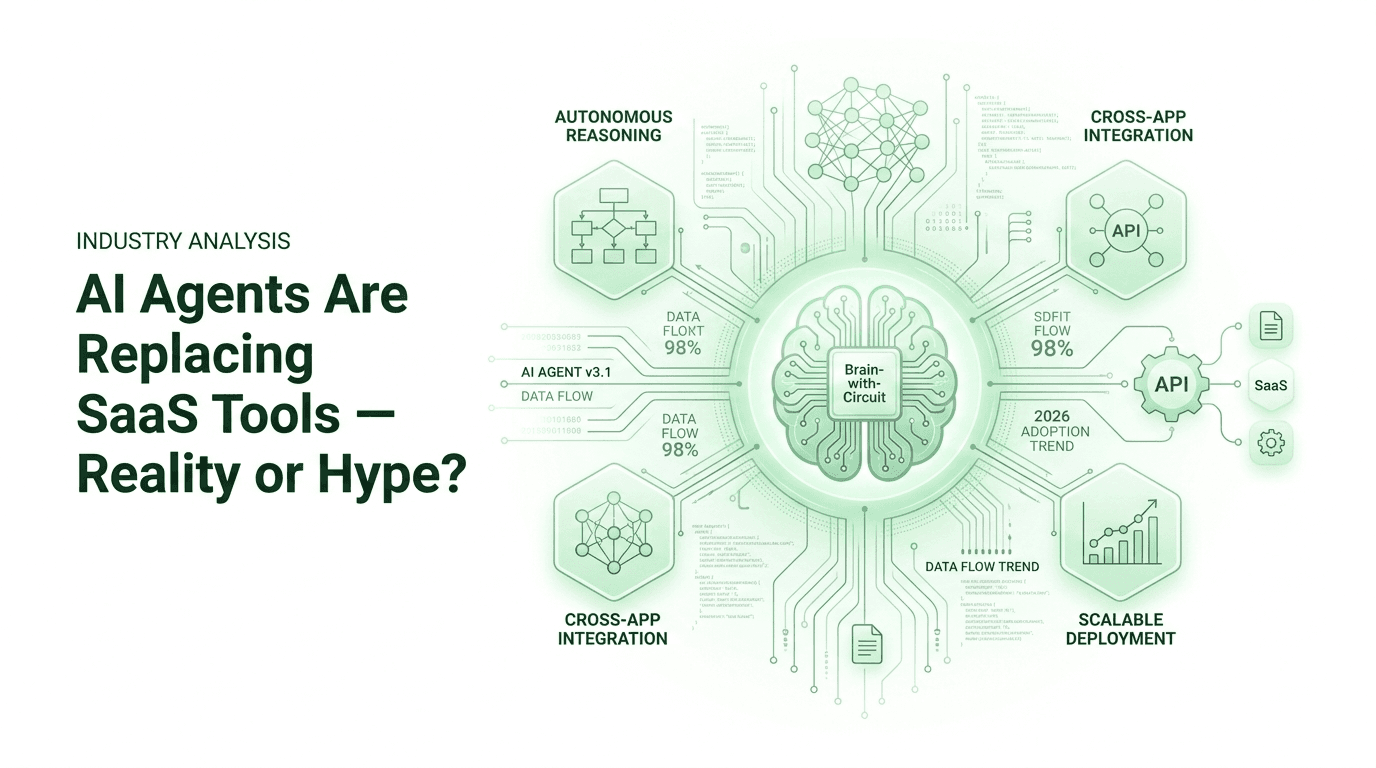
Over the past year, one claim keeps appearing across tech Twitter, startup blogs, and AI conferences: AI agents will replace SaaS tools. According to the hype, we won’t need project management apps, CRM platforms, or automation tools anymore. Instead, intelligent agents will handle everything — from sending emails to managing entire businesses.
After spending the last few months testing AI agent frameworks, building automation workflows, and comparing them with traditional SaaS platforms, I can confidently say the truth is more nuanced. AI agents are powerful, but they are not a magic replacement for software. In some cases they outperform SaaS tools. In others, they create more complexity than they solve.
This matters because we are likely entering the biggest shift in software architecture since cloud computing. Understanding whether AI agents are hype or reality can help developers, founders, and businesses make smarter decisions about what to build, what to use, and what to avoid.
In this article, I’ll break down how AI agents work, why people think they will replace SaaS, what I discovered after testing them, and what the future of software actually looks like.
Background: Why People Think AI Agents Will Replace SaaS
The Rise of SaaS — and Its Limitations
Software-as-a-Service (SaaS) dominated the last 15 years.
We moved from installed software to cloud apps:
CRM → Salesforce
Email → Gmail
Project management → Notion, Jira, Asana
Automation → Zapier, Make, n8n
SaaS worked because it standardized workflows.
But over time, problems appeared:
Too many subscriptions
Too many dashboards
Too many integrations
Too much manual setup
In my experience working with automation-heavy systems, businesses often use 10–20 SaaS tools just to run basic operations. That creates friction.
This is exactly where AI agents enter the conversation.
What AI Agents Actually Are
An AI agent is not just a chatbot.
Modern AI agents combine:
Large language models
Memory systems
Tool usage
API integration
Planning logic
Instead of using a fixed UI, you give the agent a goal.
Example:
“Find leads, send emails, update CRM, and schedule calls.”
A SaaS tool needs configuration.
An AI agent can decide the steps.
This flexibility is why people believe agents will replace SaaS.
But flexibility also introduces risk.
Why the Hype Exploded Recently
Three things changed recently:
LLMs became good at reasoning
Tool-calling became reliable
Agent frameworks became easier
Tools like:
LangChain
AutoGPT-style agents
OpenAI tool calling
n8n AI workflows
made it possible to build automation without building full apps.
After testing these systems, I noticed something important:
Agents feel powerful in demos — but production is different.
That gap is where reality lives.
Detailed Analysis: Where AI Agents Actually Replace SaaS — and Where They Don’t
1. Agents Replace Simple SaaS Tools Easily
AI agents are great at replacing tools that mainly move data.
Examples:
Email automation
Data scraping
Lead generation
Simple reporting
Content generation
In one workflow I built, an agent replaced:
Zapier
Google Sheets scripts
Email automation tool
The agent handled everything through API calls.
Why this works:
These tasks are procedural.
Agents excel at procedural logic.
So yes — some SaaS categories are at risk.
2. Agents Struggle With Complex UI-Based Software
Where agents fail is structured interfaces.
Examples:
Design tools
Accounting systems
Video editing software
Enterprise dashboards
These tools require:
Visual feedback
Precision control
Deterministic behavior
After testing agent-based automation for accounting tasks, I found error rates too high for real finance use.
This is why SaaS will not disappear.
Some software must remain deterministic.
3. Agents Reduce SaaS Usage — Not Replace It
The real shift I see is this:
Agents become the layer above SaaS.
Instead of using 10 apps manually, you use an agent that controls them.
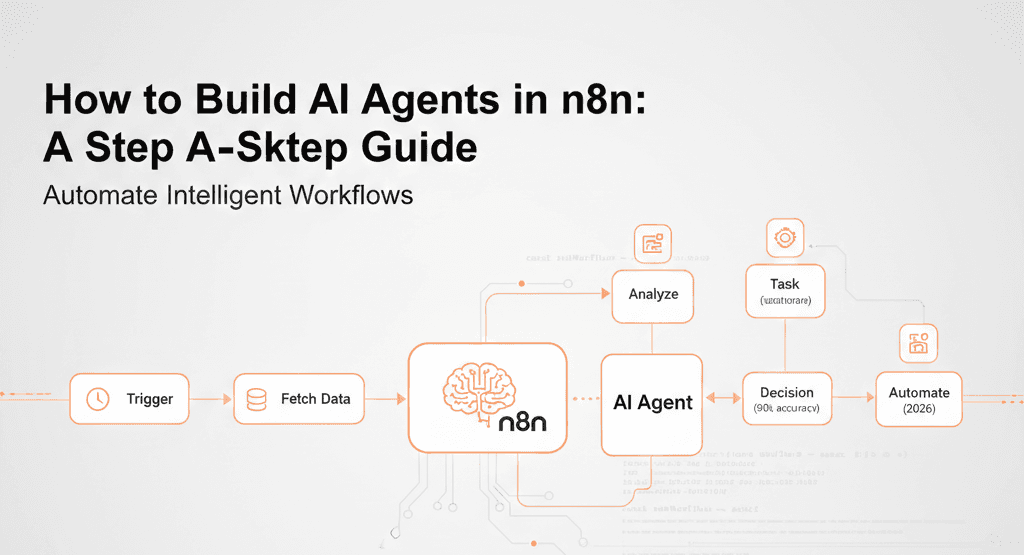
Example workflow:
Agent → CRM API
Agent → Email API
Agent → Calendar API
Agent → Database API
The SaaS tools still exist.
But the user interface changes.
This is similar to what happened with cloud computing.
We didn’t remove servers.
We changed how we use them.
4. Why Developers Love the Idea of Agent-Only Software
From a builder’s perspective, agents feel amazing.
You can:
Skip UI development
Skip complex logic
Skip many edge cases
Use APIs directly
In my experience building internal tools, agent-based workflows reduce development time dramatically.
But they also introduce:
Unpredictability
Debugging difficulty
Hidden failures
Traditional SaaS feels slow to build.
Agents feel fast — until something breaks.
5. The Economic Impact on SaaS Companies
If agents keep improving, SaaS companies must adapt.
Possible changes:
We are already seeing this.
Modern SaaS products now add:
AI assistants
Automation features
API access
AI workflows
They know agents are coming.
And they are evolving instead of dying.
What This Means for You
For Developers
Learn APIs, not just UI tools.
Future workflows will look like:
Agent → API → Service → Result
Developers who understand integrations will win.
For Startup Founders
Don’t build SaaS without automation.
Users expect:
AI assistance
Workflow automation
API access
A SaaS without AI feels outdated already.
For Businesses
You don’t need to replace SaaS.
You need to add agent layers.
Start with:
Automation tools
AI assistants
Workflow builders
Then gradually reduce manual work.
For Freelancers & Solo Builders
Agents create huge opportunities.
You can build:
AI automations
Internal tools
Custom agents
Workflow systems
Small builders can now do what required teams before.
This is one of the biggest shifts I’ve seen in software.
Expert Tips & Recommendations
1. Use Agents for Automation, Not Core Systems
Keep critical logic in stable software.
Use agents for:
Repetitive tasks
Data movement
Content work
Research
2. Design API-First Systems
Future software will be controlled by agents.
If your tool has no API, it will struggle.
3. Combine SaaS + Agents + Automation
Best stack today:
SaaS for core data
Automation for workflows
Agents for intelligence
This combination works better than any single tool.
4. Monitor Agent Actions
Never trust agents blindly.
Add:
Logs
Validation
Error handling
Production agents need guardrails.
5. Learn Prompt Engineering + System Design
Future developers must know both.
Agents are not magic.
They are systems.
Pros and Cons of AI Agents Replacing SaaS
Pros
Less manual work
Faster automation
Flexible workflows
Reduced tool count
Lower development cost
Cons
Unpredictable behavior
Debugging difficulty
Security risks
Reliability issues
Hard to scale safely
In my experience, agents are incredible helpers — but bad masters.
Frequently Asked Questions
1. Will AI agents replace SaaS completely?
No. They will reduce SaaS usage but not eliminate it.
2. Are AI agents ready for production?
Yes for automation, not always for critical systems.
3. Should startups build AI-first products?
Yes, but keep strong backend logic.
4. What skills are important now?
APIs
Automation
System design
AI integration
5. Are no-code tools becoming obsolete?
No. They will integrate AI agents instead.
6. Is this hype or real?
Both.
The hype is exaggerated.
The shift is real.
Conclusion
AI agents are not replacing SaaS overnight, but they are changing how software is used. The biggest shift isn’t that apps disappear — it’s that users interact with them differently.
After testing modern agent systems, what I discovered is clear:
Agents excel at automation, orchestration, and flexibility, but SaaS still wins in reliability, structure, and safety.
The future will not be agent-only or SaaS-only.
It will be hybrid.
Here are the key takeaways:
AI agents will reduce SaaS usage, not eliminate it
API-first software will dominate
Automation skills are becoming essential
Developers must learn agent-based workflows
The next generation of software will be controlled, not clicked
We are at the same stage cloud computing was in 2008.
Not the end of software.
The beginning of a new layer.