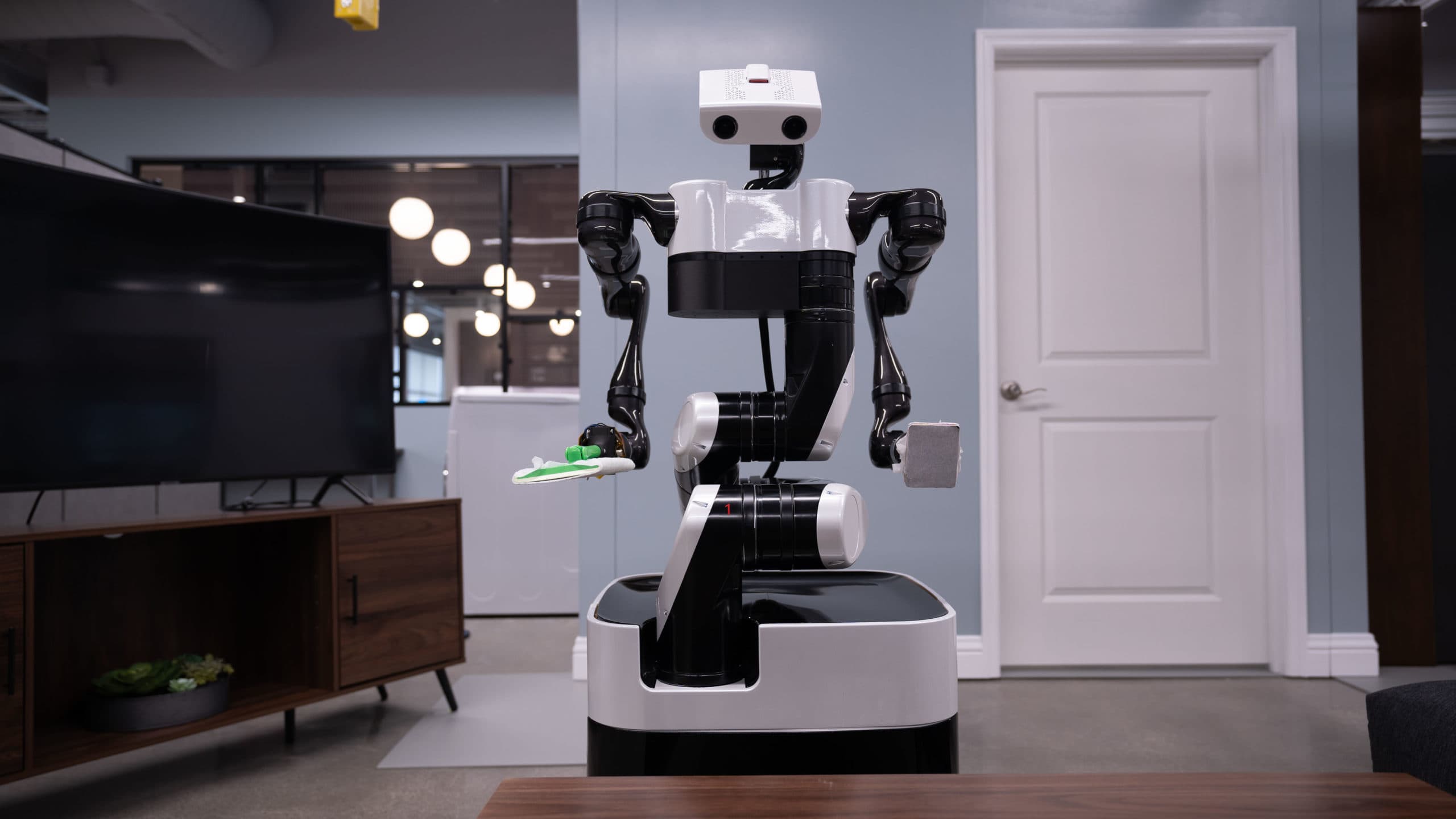
Home robotics is maturing out of its novelty phase and into practical everyday utility. Companies like Toyota and Dyson—long associated with engineering excellence—are now addressing real household chores through robotic solutions, especially in kitchen assistance and cleaning automation. By 2027, these robots may well become common fixtures in mid- to high-income households worldwide.
But this trajectory is more than just product launches. It reflects deeper trends in AI, hardware miniaturization, workflow automation, and human-robot interaction. To understand where this transformation is headed—and whether it’s truly transformative—we need to look beyond press releases.
This analysis explores:
What makes modern home robots different from past generations
Real-world use cases and who should pay attention
The technical anatomy of key features
Problems and limitations
Price-to-value assessments
Buying recommendations
Expert sentiment and critical perspectives
Broader industry context
Let’s begin with what sets these new robots apart.
What Makes This Different from Predecessors and Competitors
Home robots have existed in one form or another for decades: robotic vacuums, entertainment robots, experimental assistants, and prototypes. What’s fundamentally different in this new wave?
1. Task Specificity and Practicality
Earlier generations often focused on one narrow task (e.g., vacuuming in a single room). Newer models aim for end-to-end chore cycles:
Multi-surface cleaning
Kitchen prep tasks (chopping, stirring, ingredient handling)
Decision-making about task prioritization
This is not automation by remote control, but autonomous task execution.
2. AI-Driven Perception and Adaptation
Rather than preprogrammed sequences, modern robotic systems combine:
Computer vision to identify objects and spatial layouts
Machine learning to adapt to new conditions
Sensor fusion (LIDAR, depth cameras, tactile sensors) to navigate and manipulate environments
This allows robots to deal with messy, unpredictable human spaces—far more complex than factory floors.
3. Modularity and Ecosystem Integration
Today’s robots are designed to interact with:
This ecosystem mindset distinguishes modern platforms from the isolated gadgets of the past.
4. Edge AI + Cloud Support
Onboard processing handles real-time control, while cloud intelligence supports:
This hybrid model makes robots more capable without requiring powerful—and power-hungry—hardware onboard.
5. Purposeful Design for Human Workflows
Robots are increasingly designed around human task sequences (e.g., pizza dinner prep), not just isolated chore fragments (e.g., vacuuming once around a table). Understanding human workflows fosters better usefulness.
Real-World Use Cases and Who Should Care
Home robotics are not just a sci-fi dream—they solve real problems:
1. Cleaning Automation (Dyson, others)
Expect advanced cleaning robots capable of:
Floor vacuuming and mopping across surfaces
Stair and clutter negotiation
Spot detection and residue removal
Self-maintenance (auto docking and dust bin emptying)
Who benefits?
2. Kitchen Assistance (Toyota and others)
Emerging kitchen robots aim to:
Prepare ingredients (washing, chopping, peeling)
Cook and stir according to recipes
Manage temperature and timing
Assist with plating and serving
These systems are not just appliances—they’re workflow partners.
Who benefits?
People with limited cooking skills
Time-pressed professionals
Homes with children or elders needing meal assistance
Health-conscious households seeking consistent nutrition preparation
3. Companion and Monitoring Applications
Robots may double as:
Who benefits?
4. Child Learning and Family Interaction
More advanced platforms may support:
Who benefits?
Technical Analysis of Key Features
Perception and Mapping
Modern robots rely on SLAM (Simultaneous Localization and Mapping):
Combining LIDAR, depth cameras, and IMUs
Mapping dynamic, cluttered spaces
Real-time updates for changing home environments
This allows robots to navigate without bumping into obstacles and to revisit areas accurately.
Manipulation and Actuation
Kitchen and cleaning robots use:
Robotic arms with multiple degrees of freedom
Force sensors for delicate handling
Tool end-effectors suited for human objects (e.g., pans, bowls)
This is far more complex than wheels and brushes.
AI Decision Making
Three layers of intelligence power robots:
Low-level motion control
Physics, dynamics, and collision avoidance.
Perception-based classification
Visual recognition of objects, surfaces, and tasks.
Task planning and optimization
Sequence tasks efficiently—e.g., wash → chop → cook.
Human-Robot Interaction (HRI)
Robots now support:
Voice commands
Gesture recognition
Context-aware responses
Conversational AI
This reduces friction for non-technical users.
Cloud Connectivity and Continual Learning
Connected robots can:
Share anonymized performance data
Receive behavior improvements over time
Download new task modules
Cloud learning helps all units improve collectively.
Potential Problems or Limitations
Despite rapid progress, real-world deployment has challenges:
1. Context Sensitivity
Homes vary wildly. A robot must adapt to:
Generalization remains difficult.
2. Safety and Trust
Robotic manipulation near humans can be dangerous if:
Safety standards and certification are evolving but not yet mature.
3. Cost and Accessibility
Advanced robotics remain expensive due to:
Until prices fall, adoption will skew toward affluent users.
4. Data Privacy and Security
Robots with cameras and microphones raise privacy concerns:
Who stores and accesses data?
Are recordings secured and encrypted?
Is remote access protected from intrusion?
Robust governance is essential.
5. Software Fragmentation and Updates
Cloud-dependent robots need:
Reliable connectivity
Continual updates
Patch management
Homes with poor connectivity may see degraded functionality.
Price-to-Value Assessment
Let’s consider value across segments:
Budget-Conscious Users
Basic robotic vacuums remain best value.
For now, advanced kitchen robots are innovative but premium.
Recommendation: Start with modular cleaning automation.
Performance/Feature Prioritized Users
Tech Enthusiasts and Early Adopters
Seniors and Accessibility Focused
Robotics that assist movement, monitoring, or chores can deliver high value by enabling independence.
Cost often justified by quality-of-life improvements.
Buying Recommendations for Different User Types
Busy Professionals
Automated cleaning robots with self-emptying docks
Kitchen assistance for meal prep
Premium ecosystem integration (voice and mobile control)
Families with Children
Aging in Place
Tech Enthusiasts
Budget-Focused Buyers
Entry-level cleaning robots
Hybrid manual + robotic cleaning workflows
Wait for kitchen solutions as costs fall
What Reviewers and Experts Are Saying (With Analysis)
Sentiment Among Tech Analysts
Experts often highlight:
Strong engineering pedigree (Toyota, Dyson)
Meaningful advances in perception and manipulation
Genuine utility in repetitive chores
Excitement about long-term labor substitution
But criticisms are consistent too:
Durability over years is still unproven
Costs are high relative to benefits for casual users
Early adopters shoulder biggest risk
Analysis: This duality is characteristic of emerging tech: innovation excitement tempered by real-world constraints. As hardware matures and software learns, utility will expand beyond enthusiasts.
How This Fits into Broader Industry Trends
1. AI Everywhere
Robots are extensions of broader AI adoption across industries:
Home robotics is the final frontier where AI meets physical labor.
2. IoT and Smart Home Synergy
Robots extend the Internet of Things:
Event triggers (when I leave home → robot cleans)
Cross-device automation (robot + smart fridge + voice assistants)
Data sharing for predictive maintenance
3. Labor Substitution and Time Economics
Just as dishwashers and washing machines changed domestic work, robots are rewriting chore economics. Time saved becomes economic value.
4. Human-AI Collaboration
The future isn’t robots replacing humans—but collaborating with them. Robots handle:
Humans handle:
Judgment
Creativity
Complex decision making
Technical Details Explained Accessibly
Why Sensors Matter
Vacuum robots use:
LIDAR for precise mapping
Cliff sensors to avoid falls
Proximity sensors for obstacle detection
Kitchen robots add:
Force sensors to gauge grip strength
Tactile sensors to handle delicate items
Multi-axis robotic arms for dexterous manipulation
AI Models Inside Robots
Robots combine:
Perception models to “see” objects
Action planning models to decide next moves
Natural language models for user interaction
This creates systems capable of adaptation, not rote repetition.
Future Outlook: What to Expect by 2027
1. Increased Affordability
As supply chains stabilize and production scales, price drops are expected—especially for kitchen robots.
2. Standardization
Open protocols may emerge for robot interoperability.
3. Enhanced Safety Standards
Regulatory frameworks will formalize safety and data privacy guidelines.
4. Ecosystem Expansion
Robots will integrate with:
5. AI Co-Learning
Robots will learn from aggregated data to become better across all units.
Conclusion
Home robotics are approaching a tipping point. Advances from Toyota, Dyson, and others signal not just improved products but a fundamental shift in how households operate. This shift is driven by emerging capabilities in perception, AI decision-making, manipulation, and ecosystem integration.
Robots are moving from narrow gadgets to autonomous collaborators capable of meaningful chores. Real benefits are evident for busy families, professionals, seniors, and tech enthusiasts—though limitations remain around cost, safety, and adaptability.
By 2027, robotics will likely move from early adoption into practical mainstream use, much as smartphones did a decade earlier. Understanding the nuances—technical, economic, and social—will allow consumers and industry alike to harness this transformation effectively.
If you’d like this converted into a visual infographic, executive summary, or buyer’s guide, just let me know!