Google is preparing significant upgrades to Gemini Live, introducing a new “Thinking Mode” alongside a broader rollout of experimental features. While framed as iterative improvements, these changes point to a deeper strategic pivot: Google wants its AI assistant to move beyond fast, surface-level responses and toward more deliberate, transparent reasoning—especially in live, conversational contexts.
Thinking Mode suggests Gemini will explicitly allocate more time and compute to complex tasks, prioritizing accuracy, logic, and step-by-step reasoning over speed. Meanwhile, Experimental Features indicate Google’s intent to turn Gemini Live into a continuously evolving testbed, where advanced capabilities can be trialed with users before full release.
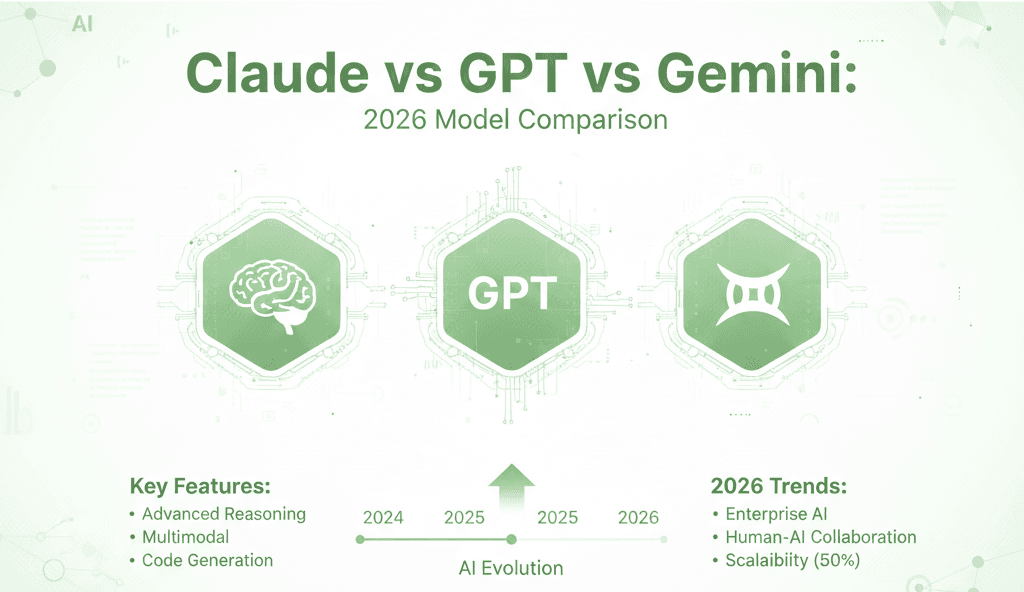
Together, these upgrades hint at Google’s response to growing pressure from rivals like OpenAI and Anthropic, whose models increasingly emphasize reasoning depth and explainability. More importantly, they signal a broader industry shift: AI assistants are no longer judged solely by how quickly they answer, but by how well they think, explain, and adapt in real time.
From Instant Answers to Deliberate Intelligence
For the past decade, consumer AI assistants have been optimized for speed. Whether it was Google Assistant, Siri, or Alexa, the core promise was instant answers to simple questions. But large language models have changed the expectations entirely.
Users now ask AI to:
Reason through multi-step problems
Explain decisions
Assist with creative and technical work
Hold extended, nuanced conversations
This has exposed a fundamental trade-off: speed versus depth. Fast answers often come at the expense of reasoning quality. Thinking Mode appears to be Google’s explicit acknowledgment that not all queries should be treated equally—and that some deserve slower, more careful computation.
In this context, Gemini Live is evolving from a voice assistant into a real-time cognitive interface, where responsiveness and reasoning must coexist.
Why ‘Thinking Mode’ Matters More Than It Sounds
At a technical level, Thinking Mode likely means:
Allocating more inference time per query
Allowing deeper internal reasoning chains
Reducing aggressive response truncation
Prioritizing correctness over latency
Strategically, it matters because it reframes how users interact with AI. Instead of expecting instant answers to everything, users are being taught that good thinking takes time—even for machines.
This aligns with a broader industry trend toward “slow AI” for complex tasks, mirroring how humans switch cognitive modes depending on the problem. Simple queries remain fast. Hard ones trigger deeper reasoning.
Experimental Features: Google’s Platform Play
The introduction of Experimental Features is just as important as Thinking Mode. It signals that Gemini Live is becoming a living platform, not a static product.
Google has learned from years of product development that:
Innovation in AI is too fast for long release cycles
User feedback is essential for refinement
Early exposure builds loyalty and habit
By labeling features as experimental, Google gains flexibility:
This approach mirrors strategies used in Chrome, Android, and Search Labs—now applied to AI.
Implications for Users
Everyday Users
Better answers for complex questions
More transparent reasoning
Occasional inconsistency due to experimental features
Professionals and Power Users
Improved support for research, planning, and analysis
Greater trust in step-by-step explanations
Willingness to trade speed for quality
Creators and Developers
Early access to cutting-edge AI behavior
Opportunities to adapt workflows early
Risk of features changing or disappearing
The key shift is choice: users can increasingly decide how much thinking they want their AI to do.
Industry Implications: Raising the Bar for AI Assistants
Google’s move pressures the entire AI industry. Once a major player introduces explicit reasoning modes, it resets expectations.
Competitors now face questions:
Why doesn’t your AI explain its thinking?
Why does it answer instantly but inaccurately?
Can users control reasoning depth?
This accelerates a transition from “chatbots” to reasoning engines.
Comparison With Rivals
OpenAI
Emphasizes reasoning in advanced models
Often hides internal thinking for safety reasons
Focuses on model-level improvements rather than modes
Anthropic
Strong emphasis on explainability and safety
Encourages structured reasoning
Less consumer-facing experimentation
Microsoft Copilot
Integrated deeply into productivity tools
Prioritizes usefulness over transparency
Relies heavily on OpenAI’s roadmap
Gemini’s approach stands out by making reasoning a visible, user-facing feature rather than an implicit backend improvement.
Potential Problems and Criticisms
User Confusion
Multiple modes and experimental features can overwhelm casual users.
Latency Frustration
Thinking Mode may feel slow compared to instant answers.
Inconsistent Quality
Experimental features may produce uneven results.
Trust Risks
If experimental outputs are wrong, users may generalize that distrust to Gemini as a whole.
Google will need careful UX design to prevent these issues from undermining confidence.
Expert Commentary: A Strategic Correction, Not a Leap
From a strategic perspective, Gemini Live’s upgrades feel less like a breakthrough and more like a necessary correction. Early AI assistants over-promised speed and under-delivered reasoning.
By formalizing Thinking Mode, Google is:
Admitting that not all intelligence is instant
Teaching users how to work with AI more effectively
Positioning Gemini as a serious cognitive tool, not just a convenience feature
This humility—acknowledging limits and trade-offs—may ultimately strengthen trust.
Historical Context: Echoes of Past Computing Shifts
This moment resembles earlier transitions:
From single-threaded to multi-threaded CPUs
From simple search to ranked, contextual search
From static software to continuously updated platforms
In each case, complexity increased—but so did capability. Gemini Live’s evolution fits squarely into this pattern.
What This Means for Different User Segments
Students
Knowledge Workers
Stronger analytical assistance
More reliable brainstorming
Slightly slower workflows
Enterprises
Potential for more trustworthy AI
Clearer auditability of reasoning
Need for governance over experimental features
Predictions: What Comes Next
Short Term
Thinking Mode rolls out selectively
Experimental features rotate rapidly
User feedback heavily shapes development
Medium Term
Customizable reasoning depth
Task-specific thinking presets
Deeper integration with Workspace and Android
Long Term
AI assistants that dynamically switch cognitive modes
Real-time collaboration between human and AI reasoning
Thinking transparency becomes a standard expectation
Final Analysis: Gemini Live Is Learning How to Think in Public
Gemini Live’s Thinking Mode and Experimental Features represent a philosophical shift as much as a technical one. Google is moving away from the illusion that AI should always be fast and effortless—and toward a model where thinking is visible, intentional, and adjustable.
This won’t please everyone. Some users just want quick answers. Others will welcome the depth and honesty. But strategically, Google is betting that the future of AI assistants belongs not to the fastest responders—but to the systems that reason best, explain clearly, and evolve openly.
If that bet pays off, Gemini Live may redefine what people expect from AI—not as a talking search box, but as a thinking partner.