Recent advances in AI vision models have demonstrated an unexpected capability: some systems can now recognize, describe, and even explain optical illusions—visual phenomena that systematically deceive human perception. These models don’t merely label images; they identify discrepancies between physical measurements and perceived reality, sometimes articulating why an illusion works.
This development marks a shift in how machine perception is evaluated. Optical illusions have long been considered a uniquely human vulnerability, rooted in the brain’s shortcuts for interpreting the world. That AI can now process these distortions raises questions not just about how far machine vision has come, but about what perception actually is.
The milestone is less about AI “seeing like humans” and more about revealing the fundamental differences between biological and artificial intelligence—and what those differences teach us about the human mind itself.
Why This Matters: The Bigger Context Behind Optical Illusions
Optical illusions aren’t just visual tricks. They are diagnostic tools—used for over a century to probe how the brain constructs reality.
Illusions reveal:
The assumptions our brains make
The shortcuts perception relies on
The trade-offs between speed and accuracy
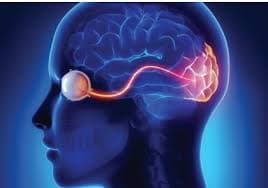
That AI can now engage with illusions suggests something deeper: perception is not a passive recording of reality, but an inferential process. Both humans and machines interpret sensory input, but they do so using radically different internal logic.
This matters because:
Perception underpins decision-making
Vision models increasingly guide real-world systems (cars, drones, medical tools)
Understanding errors is more important than celebrating successes
If AI fails—or succeeds—at illusions differently than humans, it exposes how intelligence itself is structured.
A Brief History: Why Illusions Have Always Defined Intelligence Research
Human Brains: Evolutionary Shortcuts
Human vision evolved to:
Illusions exploit these shortcuts. The brain fills in gaps using prior experience, often unconsciously.
Early AI: Literal but Blind
Early computer vision systems:
They didn’t fall for illusions—but only because they didn’t truly see anything.
Modern AI: Learned Perception
Today’s models:
Learn patterns from massive datasets
Build internal representations
Develop statistical “expectations”
This is where illusions become interesting.
What’s Actually New: Why This Isn’t Just Better Image Recognition
The Key Shift: Models Are Inferring, Not Measuring
When an AI identifies an illusion, it isn’t fooled in the same way humans are—but it recognizes the conflict between physical reality and perceived structure.
This suggests:
In other words, modern AI is no longer just processing images—it’s modeling perception.
This Is Different From Past Benchmarks
Traditional vision benchmarks test:
Object detection
Classification accuracy
Edge recognition
Illusions test:
Assumptions
Biases
Interpretive frameworks
That’s a much higher bar.
What This Reveals About the Human Brain
Ironically, AI’s progress highlights how non-optimal human perception is.
Humans Prioritize Meaning Over Accuracy
Your brain asks:
“What is this likely to be?”
Not:
“What is this exactly?”
This is why illusions persist even when we know they’re false.
AI Can “Step Outside” Perception
AI doesn’t experience illusions. It analyzes them.
This difference reveals:
Human perception is embodied and emotional
AI perception is detached and analytical
Conscious experience shapes interpretation
AI can describe why an illusion works—but it doesn’t feel compelled by it.
Implications for AI Users
Everyday Users
For most people, this means:
Smarter image understanding
More reliable visual assistants
Better accessibility tools for visual impairments
But it also means:
Creative Professionals
Designers, artists, and filmmakers gain:
Tools that understand visual ambiguity
AI collaborators that can analyze visual psychology
New ways to test audience perception
Medical and Scientific Users
Illusion-aware vision models may:
Improve diagnostic imaging
Detect perceptual anomalies
Help model neurological disorders
This is especially relevant in studying conditions like schizophrenia or visual agnosia.
Industry Impact: Why Companies Care
Autonomous Systems
Self-driving cars must:
Distinguish illusions from real obstacles
Handle shadows, reflections, and depth ambiguity
Understanding illusions isn’t optional—it’s safety-critical.
XR and Spatial Computing
Virtual and augmented reality rely on:
AI that understands illusions can design better ones.
Human-AI Interaction
If AI perceives the world differently:
Comparisons: How This Stacks Against Other AI Breakthroughs
Like AlphaGo — But Subtler
AlphaGo beat humans at a defined game.
Illusion-aware AI challenges something deeper:
Unlike Language Models
Language models reflect:
Cultural bias
Statistical association
Vision models reveal:
Perceptual bias
Structural assumptions
This makes their errors harder—and more fascinating—to interpret.
Potential Problems and Criticisms
1. Illusions Are a Narrow Test
Critics argue:
This is fair—but historically, edge cases expose core principles.
2. Risk of Overinterpretation
Just because AI can explain illusions doesn’t mean it:
There’s a danger in anthropomorphizing.
3. Misaligned Trust
Users may:
Illusions remind us that confidence ≠ correctness.
Expert Perspective: Why This Is Strategically Important
From a research standpoint, illusion-aware AI represents:
A shift from performance metrics to cognitive modeling
A bridge between neuroscience and machine learning
A testbed for explainable AI
Strategically, companies investing here aren’t chasing headlines—they’re:
Reducing edge-case failures
Improving interpretability
Preparing AI for real-world ambiguity
This is long-term infrastructure work, not flashy demos.
What This Means for Competitors
Companies that ignore perceptual understanding risk:
Fragile systems
Poor human alignment
Regulatory scrutiny
Those that invest early gain:
Safer autonomy
Better UX
Deeper trust
This could become a quiet but decisive competitive advantage.
Likely Next Steps
Short Term
More illusion-based benchmarks
Research collaborations with neuroscientists
Public demonstrations of perceptual reasoning
Mid Term
Long Term
Hybrid models combining perception and reasoning
Better theories of artificial consciousness (still not actual consciousness)
New insights into human cognition
Industry Trend: From Intelligence to Understanding
For decades, AI chased:
Now it’s chasing:
Illusions sit at the intersection of all three.
Conclusion: AI Isn’t Learning to See Like Us — We’re Learning How We See
The real story isn’t that AI can interpret optical illusions.
It’s that:
Illusions expose the shortcuts in human perception
AI exposes those shortcuts by not needing them
Intelligence isn’t about seeing reality—it’s about constructing it
AI doesn’t prove humans are flawed.
It proves perception is a design trade-off, not a mirror of truth.
And in that realization lies the next phase of both AI development—and our understanding of ourselves.