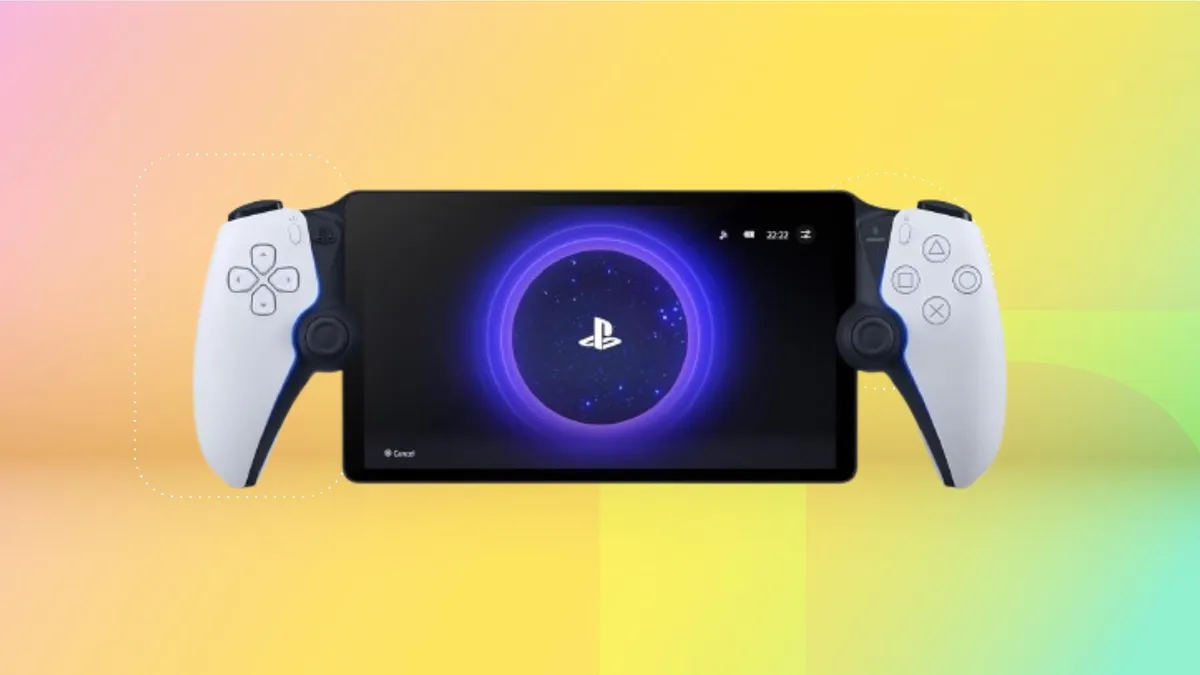
Sony’s PlayStation Portal launched in late 2023 as a novel remote play handheld designed to stream PS5 games over Wi-Fi. The concept was intriguing — a portable device, resembling a dedicated PlayStation controller with a built-in screen — but the execution left many gamers underwhelmed because it couldn’t run games locally and initially required a PS5 nearby to stream content.
Now, fresh rumors indicate Sony could release an OLED-equipped Portal model, potentially dubbed PlayStation Portal Pro, with a sharper, more vivid screen — possibly with higher refresh rates — and expanded capabilities.
This analysis explores what that could mean for players, how it compares to competition, how it fits into Sony’s strategy, and whether it’s worth your money.
What Makes This Different from Predecessors and Competitors
From PS Portal 2023 to Rumored OLED Model
The original Portal was a streaming bridge rather than a true handheld console:
It streamed PS5 games over Wi-Fi using Sony’s Remote Play technology.
It used an 8-inch 1080p LCD at 60Hz — good, but limited compared with OLED rivals.
It lacked native game processing and depended on either a nearby PS5 or cloud streaming via a PlayStation Plus Premium subscription.
A rumored OLED upgrade could bring major differences:
Deeper blacks and richer colors — OLED pixels emit their own light, boosting contrast significantly over LCD.
Higher refresh rate (possibly 120Hz) — smoother motion on supported games.
Enhanced visual fidelity for streaming — improving perceived quality even though the game is still rendered elsewhere.
This is significant because many competitors — like the Nintendo Switch OLED and the Steam Deck OLED — already leverage OLED screens for vibrant visuals and deeper immersion. The rumored OLED Portal would therefore not just keep pace, but narrow a key hardware gap.
Vs. Steam Deck / Switch / Other Handhelds
Steam Deck: A full PC gaming handheld capable of running games locally. Portal doesn’t process games; it streams them.
Switch OLED: Native games with optimized performance; Portal streams PS5 titles without onboard game logic.
Mobile Phones/Tablets: Many already stream games via Remote Play apps, making the original Portal feel redundant — an OLED model elevates the experience with a hardware-optimized form factor.
So the “OLED Portal” wouldn’t suddenly compete with handhelds running titles natively, but it would stand out as the best dedicated PS Streaming device.
Real-World Use Cases — Who Should Care?
The Portal OLED could appeal most to specific user groups:
1. PS5 Owners with Shared Space Needs
For households where multiple people want the TV, Portal gives another way to play PS5 games without interrupting someone else — now with better screen quality.
2. Travelers and Remote Players
With cloud streaming becoming robust, gamers who travel or spend time away from their console could play PS titles on the go — in airports, hotels, etc.
3. Visual Aesthetes
OLED’s deeper blacks and vibrant colors elevate cinematic games (e.g., Horizon, God of War) far beyond what LCD can do.
4. Competitive or Fast-Moving Games
Higher refresh rates (120Hz) improve responsiveness, crucial for action and FPS titles.
5. Tech Enthusiasts
Sony fans and early adopters who want the best possible remote play experience without resorting to phones or PCs.
Who Might Not Care
Those who prefer harware-local handhelds (Steam Deck, Switch).
PS owners who are rarely away from home.
Users with unreliable Wi-Fi or mobile data.
Technical Analysis of Key Features
Let’s break down the major rumored specs and what they mean in practical terms.
OLED Display
OLED screens illuminate each pixel individually, leading to:
True blacks (pixel off = no light), enhancing contrast.
Wide viewing angles without washout.
Potential power efficiency when displaying darker scenes.
Sony potentially choosing an 8-inch OLED with 120Hz would be a major step up from 60Hz LCD — particularly for fast games where motion clarity matters.
Refresh Rate (120Hz)
Higher refresh rates reduce blur and make gameplay feel smoother. While streaming doesn’t guarantee 120Hz output for every game (some titles cap at 60fps on PS5), the hardware being capable sets a higher baseline — beneficial for:
Connectivity — Wi-Fi and Cloud
Strong Wi-Fi remains crucial. If cloud features improve, users can play without a PS5 powered on — making Portal function like a true handheld. New UI updates already split Remote Play and Cloud Streaming modes.
Audio & Haptics
The original Portal supported DualSense features, like adaptive trigger feedback and haptics — unique for handheld streaming. Paired with Sony’s PlayStation Link audio tech, this could offer immersive, low-latency audio over supported headsets.
Battery, Ergonomics, Ports
Leaks suggest a possible better battery life with the OLED model (OLEDs can be more efficient depending on content). Community feedback suggests mixed ergonomic appeal — some prefer its lightweight design; others find it less comfortable long term compared with gaming handheld consoles.
Potential Problems and Limitations
No device is perfect — and the Portal OLED will likely inherit some structural issues:
1. Still Streaming-Only
Even with better visuals, the device won’t run games locally — unlike Steam Deck or Switch. Some gamers see this as a fundamental limitation.
2. Network Dependence
Streaming quality hinges on Wi-Fi or 5G broadband quality. In practice, even high Mbps speeds can fluctuate, causing latency or drops.
3. Latency
Remote play adds input and display latency — generally more than a handheld running games locally. This can impact responsiveness in competitive or precision gaming.
4. Price Uncertainties
OLED screens add cost. Rumors don’t confirm pricing — a raise above the original $199 SONY Portal could affect value perception.
5. Feature and Content Restrictions
Not all PS Plus titles may stream perfectly on handheld; some titles optimized for local performance won’t reflect the same feel over streaming yet.
Price-to-Value Assessment
In evaluating the rumored Portal OLED, consider:
If Priced ~Same as Original (~$200–$250)
OLED + 120Hz at this price would deliver excellent value for PS5 owners focused on streaming.
For gamers with strong Wi-Fi, it could be a must-buy accessory.
If Priced Higher (~$300–$400)
Value Depends on Use
If you:
Stream often and care about visuals → High value.
Play mainly at home with controller/TV → Diminished value.
Travel frequently → High value if cloud performance is strong.
Buying Recommendations by User Type
1. PS5-Only Gamers (Casual)
2. Visual Enthusiasts
3. Competitive Players
4. Mobile and Traveler Gamers
5. Hardcore Handheld Crowd
What Reviewers and Experts Are Saying (with Analysis)
Across tech news and community forums:
Early Portal Reviews
Critics initially saw the original Portal as limited due to networking constraints and reliance on a PS5.
With cloud streaming updates, it’s seen as more useful, approaching standalone capability.
OLED Rumor Reactions
Community Voices
Forums show mixed opinions: some see the OLED model as an essential upgrade; others question adding new features to a streaming-only device. There’s concern about price hikes, but also excitement about enhanced visuals.
Expert Take: The OLED Portal won’t transform Sony’s handheld strategy overnight, but it substantially upgrades the streaming experience — addressing the biggest hardware gap (display quality) and signaling Sony’s interest in bridging console and handheld markets.
How This Fits Broader Industry Trends
1. Streaming Everywhere
Gaming is increasingly platform-agnostic, with streaming (Xbox Cloud, GeForce Now) growing. The Portal OLED fits this trend — a device dedicated to streamed play rather than owned hardware.
2. Rise of Premium Displays
OLED and high refresh rates are industry expectations now — not luxuries. Handheld gaming standards have shifted with devices like Steam Deck OLED and Switch OLED.
3. Console + Cloud Ecosystem
Sony is evolving from console-centric to ecosystem-inclusive, blending console power with cloud access — critical to remain competitive with Microsoft and others.
4. Next-Gen Handhelds
Rumors of a full PlayStation handheld tied to PS6 show Sony may be treating Portal as a stepping stone in a broader handheld roadmap rather than the final answer.
Conclusion: OLED Portal — Upgrade Worth Anticipating
The rumored PlayStation Portal with OLED display is more than an incremental model refresh — it’s a thoughtful response to criticisms of the original. By addressing the display and responsiveness, Sony enhances immersion and relevance in a market where capture-ready handhelds and streaming competitors are rising fast.
Key Takeaways
OLED and higher refresh rates could transform the remote play experience.
Value largely depends on price and your network environment.
It doesn’t solve streaming limitations, but it significantly improves the experience.
For the right audience — PS5 owners, cloud gamers, and visual devotees — this could be a strong purchase.
Buying Advice:
Wait for reviews and price confirmation before committing. If Sony keeps price competitive and cloud streaming delivers consistently, this could be one of 2026’s most compelling accessory upgrades for PlayStation fans.