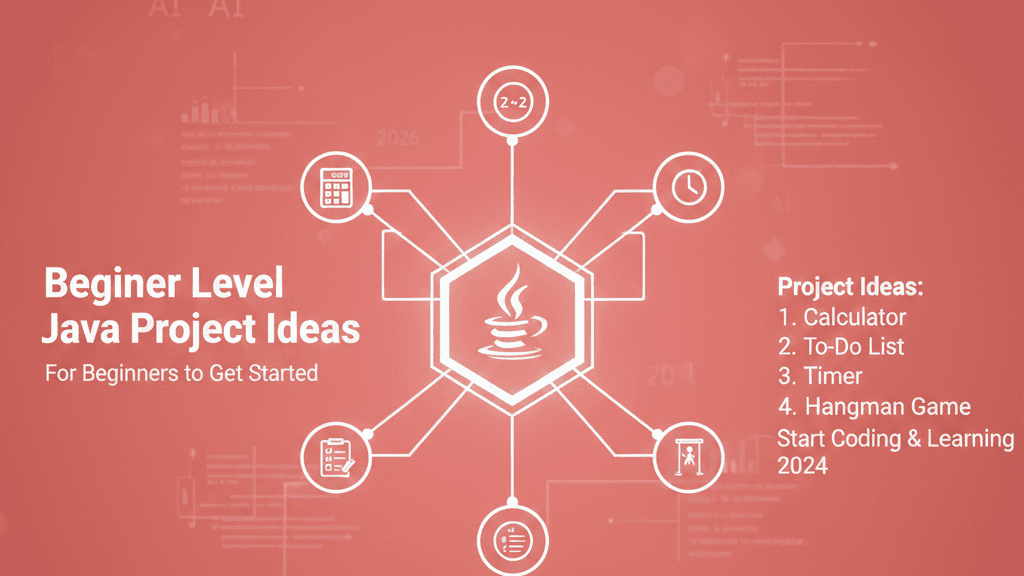
Every aspiring developer reaches a critical moment: you’ve learned loops, conditions, and object-oriented programming in Java—but now what? That’s where beginner level Java project ideas become more than academic exercises. They become the bridge between theory and real-world development.
In my experience mentoring junior developers, the difference between someone who “knows Java” and someone who can use Java comes down to projects. Not just any projects—but thoughtfully selected ones that gradually build problem-solving skills, debugging ability, and software design thinking.
In this article, I’ll go beyond listing random ideas. I’ll explain why each project matters, what skills it develops, how to expand it further, and how it fits into today’s tech landscape. Whether you're a student, career switcher, or hobbyist, you’ll leave with a roadmap—not just ideas.
Let’s dive in.
Background – Why Java Projects Matter More Than Tutorials
Java has been around since 1995, yet it remains one of the most in-demand programming languages globally. It powers enterprise applications, Android apps, banking systems, large-scale backend services, and even parts of big data platforms.
But here’s what most beginners misunderstand: watching tutorials gives you familiarity; building projects gives you competence.
After testing and reviewing countless entry-level portfolios, I’ve noticed a pattern. Developers who complete structured beginner projects:
Understand object-oriented programming deeply
Debug more confidently
Write cleaner, modular code
Transition faster into frameworks like Spring Boot
While many online courses focus on syntax, real employers look for applied knowledge. They want to see that you can:
Design classes
Handle user input
Work with files
Structure logic properly
Historically, Java learning started with console-based programs. Today, however, even beginner-level projects can include:
GUI development using JavaFX or Swing
Basic database integration (JDBC)
File handling and persistence
Simple REST APIs
The bigger picture? Projects simulate real-world thinking. They force you to answer questions like:
And that’s where growth happens.
Detailed Analysis – 10 Beginner Level Java Project Ideas (With Purpose)
Let’s break this down by skill-building stages.
1. Console-Based Calculator
This classic project teaches:
Conditional statements
Methods
Exception handling
Start simple: addition, subtraction, multiplication, division.
Then extend it:
What I discovered when guiding beginners is that even a calculator reveals design weaknesses. Most beginners write everything inside main(). Refactoring it into separate methods teaches modularity early.
2. To-Do List Manager (Console or GUI)
This project introduces:
Expand it by:
This simulates real software patterns used in productivity apps.
3. Student Management System
A slightly more advanced project that reinforces:
Classes and objects
Collections
Searching and sorting
You can add:
File storage
GPA calculation
Basic reporting features
In my experience, this is where beginners truly understand object-oriented programming.
4. Bank Account Simulation
This is one of my favorite beginner level Java project ideas because it introduces:
Encapsulation
Constructors
Method overloading
Features to include:
Deposit/withdraw
Balance checking
Transaction history
To go further, simulate multiple users with unique IDs.
5. Number Guessing Game
Teaches:
Random number generation
Loops
User interaction
Enhance it by:
Games make logic fun and reinforce control flow.
6. Library Management System
Here you introduce:
Multiple classes (Book, User, Library)
Relationships between objects
Basic inventory logic
This project resembles real-world backend logic in enterprise systems.
7. Expense Tracker
This is practical and portfolio-worthy.
Skills learned:
File I/O
Date handling
Data aggregation
Add monthly reports and category breakdowns to simulate real fintech apps.
8. Simple Chat Application (Local)
Using sockets, beginners can:
Even a simple localhost chat app introduces real-world communication principles.
9. Password Manager (Basic)
Focuses on:
Encryption basics
File storage
Security thinking
This introduces cybersecurity awareness early.
10. Quiz Application
Reinforces:
Conditional logic
Score tracking
Structured data handling
You can add:
What This Means for You
If you're just starting out, choosing the right beginner level Java project ideas determines your growth curve.
Here’s why:
Small projects build confidence
Medium projects build structure
Extended projects build portfolio strength
In today’s job market, recruiters don’t just want certificates. They want GitHub repositories showing problem-solving ability.
For students, these projects:
For career switchers:
And for freelancers or future entrepreneurs, Java remains a strong backend option for scalable systems.
The “so what” is clear: Projects transform knowledge into capability.
Comparison – Java Projects vs Other Beginner Languages
Many beginners ask: “Why not Python projects?”
Here’s the honest comparison.
Java Strengths:
Python Strengths:
Faster to write
Simpler syntax
Rapid prototyping
However, in my experience, Java projects build stronger architectural discipline. Because Java requires more structure, beginners learn design patterns earlier.
Compared to JavaScript:
If your goal is Android or enterprise development, Java projects are highly relevant. If your goal is web development, JavaScript may offer faster visible results.
The real answer? It depends on your career path.
Expert Tips & Recommendations
After mentoring dozens of beginners, here’s what actually works:
1. Start Small, Then Refactor
Don’t aim for perfection. Build a messy version first. Then improve it.
2. Use Git from Day One
Version control is not optional. It’s industry standard.
3. Add One “Advanced” Feature
For example:
Add file storage
Add basic authentication
Add simple GUI
This pushes you beyond beginner level.
4. Document Your Projects
Write a README explaining:
What the project does
How to run it
What you learned
Recruiters love clarity.
5. Practice Clean Code
Follow naming conventions. Avoid long methods. Break logic into functions.
Pros and Cons of Beginner Java Projects
Pros:
Builds strong OOP foundation
Encourages structured thinking
Highly portfolio-friendly
Industry-relevant
Cons:
More verbose than some languages
GUI development can feel complex
Setup may intimidate absolute beginners
However, the long-term payoff outweighs early difficulty.
Frequently Asked Questions
1. How many beginner Java projects should I complete?
In my experience, 5–8 well-built projects are better than 20 rushed ones.
2. Should I use frameworks like Spring Boot as a beginner?
Not immediately. Master core Java first. Then transition into frameworks.
3. Are console projects enough?
Initially, yes. But eventually, add file handling or a simple GUI to stand out.
4. How do I know if I’m ready for intermediate projects?
If you can:
You’re ready.
5. Should I copy code from tutorials?
Use tutorials as guidance, but rewrite everything in your own way. That’s how real learning happens.
6. Are these projects good for freelancing?
Most beginner projects aren’t client-ready, but they build skills needed for backend services and Android apps.
CONCLUSION
Beginner level Java project ideas are not just exercises—they are stepping stones into real software development.
Start with simple console applications. Gradually introduce file handling, data structures, and basic GUI. Refactor your code. Document your work. Push one step beyond comfort.
In my experience, consistent project building over three to six months transforms beginners into confident junior developers.
The future of Java remains strong in enterprise, Android, and cloud-native development. And the developers who stand out aren’t the ones who watched the most tutorials—they’re the ones who built.
Now, pick one project. Start today. Improve tomorrow. Repeat.
That’s how real programmers are made.