
Why Today’s AI Models Are Missing Critical Capabilities: An In-Depth Analysis of the Current Limitations and Future of AI
Jan 18, 2026
7 min read

Loading...
Artificial intelligence today is ubiquitous yet paradoxically incomplete. On one hand, generative models can write code, draft essays, and generate realistic images. On the other, they exhibit serious blind spots—hallucinations, fragile reasoning, superficial pattern matching, and brittle performance outside training distributions. When a leading figure like Demis Hassabis, CEO of Google DeepMind, suggests that today’s models are missing critical capabilities, it is not casual criticism; it reflects an industry reckoning that the current paradigms—large neural networks trained on massive data—are not the final architecture for artificial general intelligence.
This analysis explores that claim through a multifaceted lens:
The current state of AI capabilities
How we got here and what architectural choices shaped modern models
Key players and their divergent strategies
Adoption data showing growth and limitations
Case studies where models succeed and fail
Fundamental benefits and deep challenges
Expert perspectives and predictions
What this means for average users vs professionals
How to prepare or take advantage of ongoing changes
A rigorous future outlook and timeline
The goal is not to regurgitate headlines but to synthesize insight that reflects deep understanding of where AI truly stands and where it is headed.
Modern AI models—especially large language models (LLMs) like GPT-4/5, Google’s Gemini series, Anthropic’s Claude, and Meta’s LLaMA families—demonstrate capabilities once unimaginable. They can:
Generate natural language text that appears fluent and contextually relevant
Translate between languages
Summarize long documents
Create images and basic audiovisual content
Assist in coding and data analysis
However, despite surface fluency, these models expose critical limitations:
Hallucinations: Fabricated facts or plausible-sounding errors
Lack of causal reasoning: Inability to model cause and effect reliably
Shallow understanding: Pattern recognition without robust world models
Limited memory and continuity: Difficulty with long-term context
Fragile adaptability: Performance drops outside trained domains
These constraints are not incidental bugs—they reflect fundamental architectural boundaries in current AI paradigms.
Understanding why today’s models lack core capabilities requires a brief historical trajectory of AI:
AI began as rule-based systems, relying on hand-coded logic and human expertise. These systems were explainable but brittle and non-scalable.
With increased compute and data, machine learning shifted to statistical models:
SVMs, decision trees, and shallow neural nets gave way to
Deep learning architectures like CNNs and RNNs
These models excelled in perceptual tasks (vision, speech) but struggled with reasoning and abstraction.
The transformer architecture (attention mechanisms) enabled:
Massive language models
Zero-shot and few-shot learning
Cross-modal capabilities (text, vision, audio)
LLMs like GPT and BERT derivatives now dominate benchmarks, but with the architecture’s core limitation: heavy reliance on statistical pattern matching rather than deep semantics.
Newer models incorporate reasoning layers, retrieval systems, and external memory, yet fundamental capability gaps remain.
Thus, the current generation reflects incremental iterations on statistical architectures—not foundational paradigm shifts.
Strategy: Scale first, align second. Large models with increasing parameter counts + reinforcement learning from human feedback (RLHF).
Strengths: Broad ecosystem, fast iteration, widespread adoption.
Limitations: Hallucinations, energy cost, opaque reasoning.
Strategy: Deep research roots, multi-modal models, and investments in structured reasoning (e.g., reasoning modules, hybrid symbolic elements).
Strengths: Integration with search and data infrastructure, research depth.
Limitations: Balancing safety, privacy, and productization at scale.
Strategy: Safety-first models emphasizing predictable behavior and controllability.
Strengths: Guardrails against harmful outputs.
Limitations: Constrained expressiveness in complex reasoning.
Strategy: Open models and community ecosystems (LLaMA, open weights).
Strengths: Democratization of AI research.
Limitations: Resource and commercialization differences compared to large cloud providers.
Strategy: Domain specialization, API access, niche strengths (legal, biomedical texts).
Strengths: Focused vertical performance.
Limitations: Less breadth than general models.
Each player acknowledges the same architectural bottlenecks even as they pursue distinct strategies—evidence that the industry recognizes capability gaps but differs on how to approach them.
While precise figures vary, several trend lines are clear:
Exponential Growth in Model Scale: Parameter counts across major models have grown from hundreds of millions to hundreds of billions in a few years.
API Usage Metrics: Cloud providers report rapid adoption of AI APIs—text, vision, search, embeddings—indicating real demand despite known limitations.
Enterprise Spending: A significant percentage of enterprise AI budgets now flow into LLM embeddings, fine-tuning services, and retrieval augmentation.
Developer Interest: Developer surveys continually list generative AI and large models as top skills in demand.
But adoption growth does not equate maturity. Adoption metrics show enthusiasm, not architectural completeness.
A global enterprise deployed LLMs to auto-triage support tickets. Early results showed:
40% reduction in average handling time
However, 15–20% rate of incorrect or misleading answers
Ongoing human supervision required
This illustrates both efficacy and brittleness.
AI models augmented physician workflows by summarizing patient histories, yet:
Models hallucinated non-existent conditions
Introduced risk without tight domain constraints
Required layered safety checks
Domain knowledge gaps in models expose risk in high-stakes contexts.
Law firms use AI to draft clauses:
Saved time on boilerplate, but
Required rigorous auditing for correctness
Struggled with nuanced, jurisdiction-specific reasoning
Performance without domain discipline leads to surface fluency without reliable expertise.
Accessibility: AI democratizes aspects of reasoning and content creation.
Productivity: Synthesis tasks compress time and cognitive load.
Scalability: Models scale patterns across immense data.
Integration: Embedded capabilities boost search, QA, and summarization tools.
Yet:
Lack of Causal Reasoning: Models predict tokens, not logical relationships.
Fragility Outside Data Distribution: Models perform poorly in rare or novel contexts.
Hallucination Risk: Confidence does not imply truth—a systemic disjunction.
Opacity: Interpretability remains elusive.
Memory and Continuity Limitations: Short attention windows impede long-range reasoning.
These issues derive from the architecture itself, not implementation bugs.
Experts argue that current neural nets are powerful pattern matchers but:
Lack symbolic reasoning capabilities
Lack robust world models
Don’t internalize causal structure
This is why models sound “understood” but don’t truly understand.
Leading researchers advocate hybrid architectures:
Combine neural nets with symbolic reasoning
Graph-based world models
Modular reasoning pipelines
Such designs could bridge the gap between surface fluency and deep understanding.
Predictions include:
Neuro-symbolic AI: Integrating logic and learning
Memory-augmented systems: Persistent, editable memories
Causal AI: Systems that model cause and effect
Meta-learning frameworks: Learners that learn how to reason
The consensus is clear: scaling parameter counts alone is insufficient.
Users benefit from:
Improved search and summarization
Enhanced auto-completions
Contextual suggestions
But they must understand:
AI outputs are not facts
Verification remains critical
AI assistance is a tool, not authority
For developers, researchers, and domain specialists:
AI accelerates prototyping
Supports ideation
Offers code generation and analysis tools
Yet professionals must:
Validate AI outputs
Guard against implicit biases
Build layered safety and auditing into systems
The professional usage model transitions from trust by default to verification by design.
Invest in retrieval-augmented systems to ground generative models
Deploy human-in-the-loop oversight
Build domain-specific pipelines with explicit verification
Learn hybrid system design
Understand model limitations and bias
Build tools that enhance interpretability and traceability
Explore architectures beyond transformers
Study neuro-symbolic integrations
Advance causal reasoning paradigms
Preparation is not just skill acquisition—it is architectural mindset evolution.
Widespread adoption of retrieval-enhanced models
Early neuro-symbolic prototypes
Modular reasoning components
Persistent memory systems
AI with structured world models
Domain-specific formal reasoning backends
Fully integrated AI systems capable of:
Encoding causal understanding
Making robust predictions outside training distributions
Explaining internal reasoning paths
The future converges on intelligence that understands, not just predicts.
When Demis Hassabis says today’s AI models are missing critical capabilities, he isn’t issuing a vague critique. He is pointing to a structural reality: current architectures excel at correlation, not cognition.
What distinguishes the next generation of AI will not be bigger models or more data, but models with deeper internal representations of cause, effect, context, and continuity.
This moment is akin to the early shift from expert systems to statistical learning—once transformative, but inherently limited.
Today’s models are powerful pattern matchers.
Tomorrow’s models must become contextual reasoners.
Understanding this difference is essential for practitioners, organizations, policymakers, and users who depend on AI’s growing role.
We are not at the end of AI innovation.
We are at the threshold of its foundational reimagining.
Help others discover this article by sharing it
Check out more articles from the artificial intelligence category
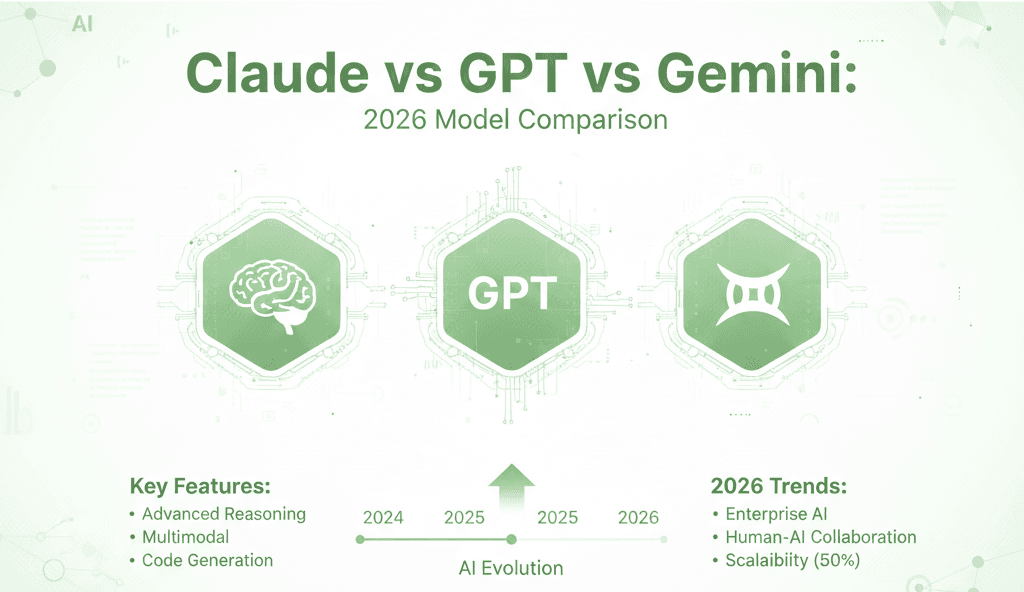
We tested Claude, GPT, and Gemini across coding, reasoning, multimodal tasks, and enterprise workflo...
AI is no longer just assisting software testing—it’s redefining it. From self-healing test automatio...
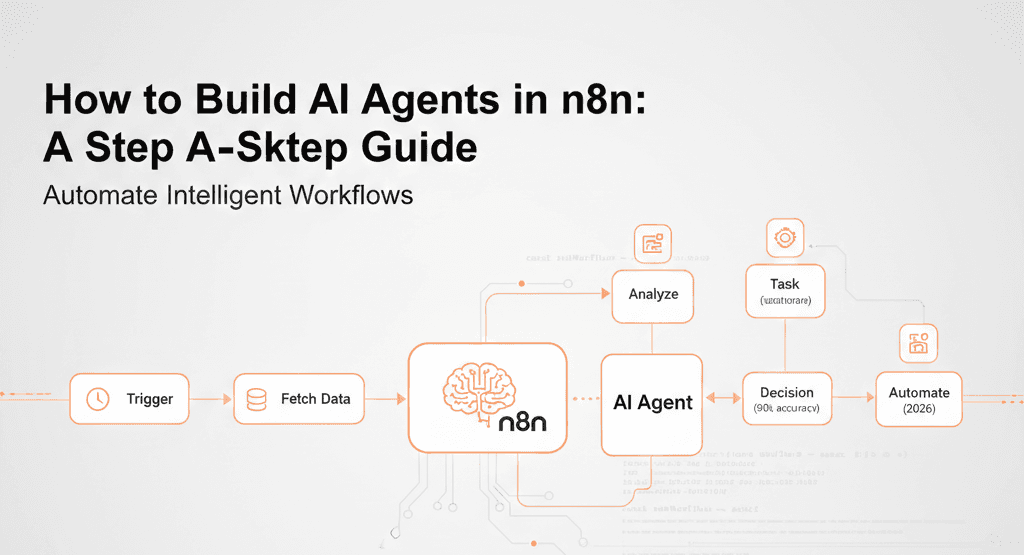
Building AI agents in n8n is no longer experimental. This guide shows how to design, deploy, and sca...