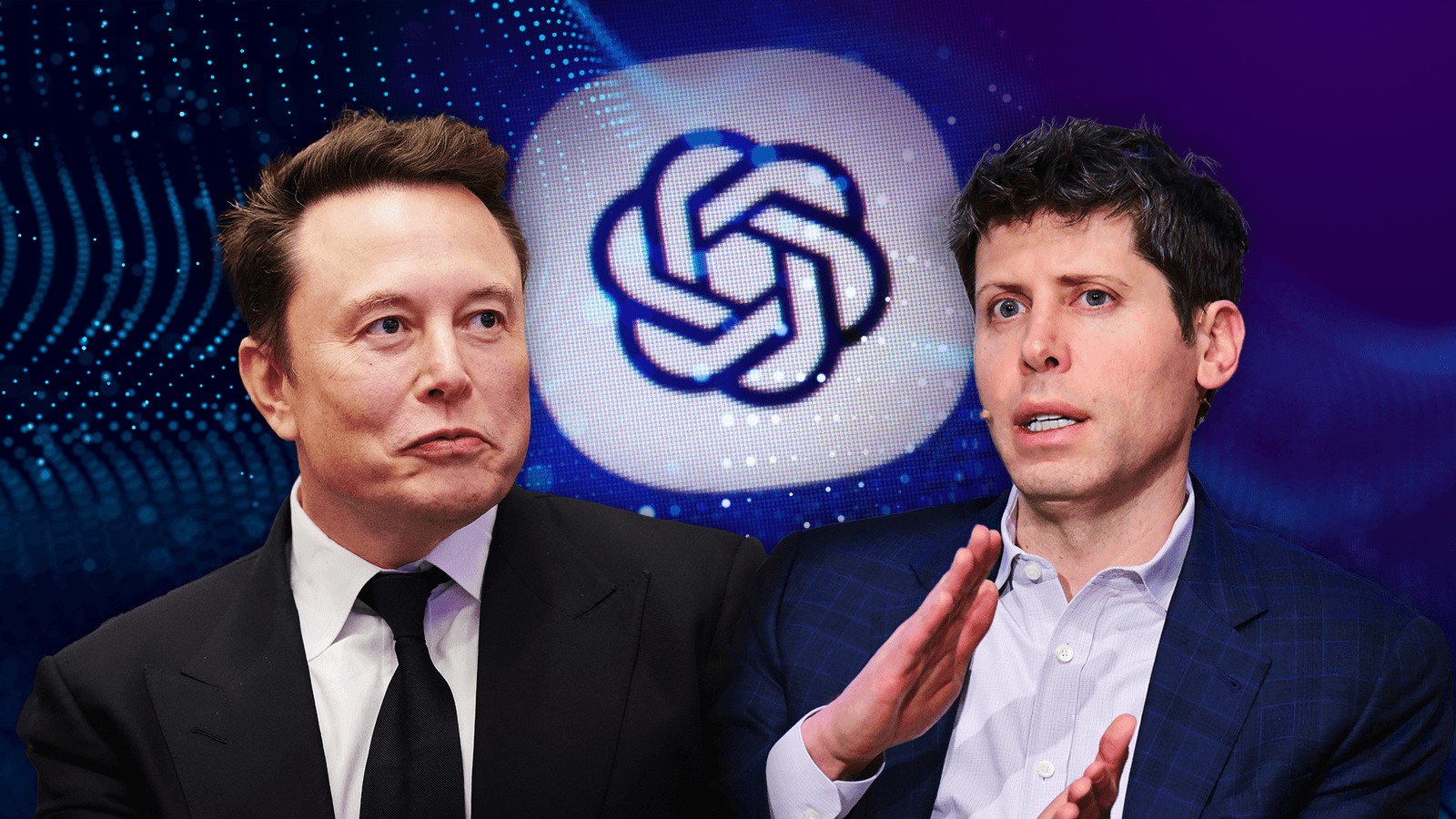
Recent unsealed court documents from the legal dispute between Elon Musk and OpenAI have offered the public its first substantive look into internal disagreements from the founding period of one of the world’s most influential AI organizations. The documents highlight early conflicts over governance, funding commitments, and strategic direction — particularly around the shift from OpenAI’s original non-profit ethos toward a hybrid commercial model and aggressive scaling strategy.
Elon Musk, a co-founder and early supporter of OpenAI, has argued that the lab deviated from its founding commitment to safe, broadly beneficial AI research with transparent oversight. OpenAI, now a leading creator of advanced generative models, frames the dispute as a disagreement over execution, not intent.
While the unsealed documents shed light on specific disagreements about funding obligations and board decisions, they do not resolve deeper questions about AI’s governance, competitive pressures, or alignment protocols. They reveal operational fissures, but leave the ideological fault lines and strategic tensions that continue to define the AI landscape largely unresolved.
Why This Matters
Understanding the Musk vs OpenAI dispute is not merely an exercise in corporate drama; it speaks to a fundamental shift in how AI is developed, governed, and commercialized.
In the early 2010s, AI research was largely a distributed, academic ecosystem. Labs at universities shared results openly. The founding of OpenAI in 2015—backed by Musk and others—was framed as a corrective to AI’s centralization: a promise to develop AI openly, safely, and for the benefit of all. OpenAI’s 2015 charter emphasized broad benefit, cooperative orientation, and an aversion to competitive secrecy.
Yet within a few years, driven by rapid progress in model scale, investment demands, and rival corporate capabilities (Google, Microsoft, Meta), OpenAI shifted toward what it framed as a “capped profit” model: a hybrid structure designed to attract capital while limiting investor returns.
The dispute with Musk reflects a broader question: Who gets to define the pace, priorities, and governance of foundational AI? Musk’s critique centers on the assertion that OpenAI moved away from its safety-first, open ethos toward a commercially driven, less transparent entity.
This matters because it echoes across:
In essence, these documents are a window into how AI’s most powerful institutions evolve under pressure.
What the Documents Reveal — And What They Don’t
Revealed: Operational and Governance Friction
The unsealed filings highlight:
Disagreements over financial commitments Musk claimed he was owed promised funding.
Board composition and decision authority: Conflict over who controlled strategic direction.
Tension over commercialization pace: Musk objected to rapid transition toward revenue-generating products.
Concerns about secrecy and external partnerships (e.g., with Microsoft).
These points illustrate a classic governance dispute around mission fidelity, control, and compensation—not just personality conflict.
Not Revealed: Deep Philosophical or Technical Disputes
Notably absent from the public documents are clear articulations of:
Technical disagreements over alignment strategies
Comparative evaluations of safety research agendas
Direct debates about model capabilities and risk thresholds
Internal assessments of long-term AI risk mitigation
Thus, while the filings document what was argued, they do not show why those arguments were substantively grounded beyond executive frustration, nor do they reveal any deep internal safety doctrine debates.
In other words: we see procedural conflict, but not the underlying strategic philosophy in detail.
Implications for Users, Industry, and Competitors
Users
For the average AI user, the dispute reinforces a subtle but critical truth: AI development is not insulated from business and governance pressures. Product quality and alignment outcomes will be influenced as much by organizational incentives as by scientific rigor.
Usability, speed, and feature enhancements may trump alignment features if commercial pressures dominate. Consumers may rarely see this tradeoff in UI, but it plays out in:
Industry
The dispute signals to the broader AI industry that:
Founding ethos matters less than capital structure and competitive imperatives
Hybrid commercial models will be the norm
Regulatory frameworks will struggle to keep pace with evolving institutional incentives
Competitors may watch this case as a blueprint or cautionary tale for balancing mission and monetization.
Competitors
Meta and Google DeepMind, both of which operate under more traditional corporate governance but heavy R&D investment, will use this narrative to argue for their own stability. The Musk-OpenAI dispute inadvertently validates alternative governance models where research and safety are embedded within broader corporate strategy rather than stand-alone charters open to dispute.
Comparison to Similar Moves by Other Companies
This is not the first time that visionary founders have clashed with institutional evolution:
Google vs Andy Rubin
The Android founder left amid strategic differences and governance friction, highlighting how control shifts with scale.
Facebook/Meta and Early Vision
Meta’s evolution from social catalyst to augmented reality ambitions reflects similar tension between founding ethos and commercial scaling.
Tesla and Board Oversight
Even Musk’s tenure at Tesla has been marked by conflict over governance and strategic control.
What distinguishes the OpenAI dispute is that it centers not just on profit or product direction, but on institutional purpose in a domain (AI) with existential import.
This dispute resembles, in spirit, the founding disagreements in:
But in AI, the stakes are amplified because the technology touches knowledge systems, autonomy, labor, and decision-making at scale.
Potential Problems or Criticisms
Lack of Transparency
One criticism of OpenAI’s evolution is that the hybrid structure—and the decisions it enabled—were not as transparent to the public or co-founders as they could have been. Governance clarity matters in high-stakes tech.
Mission Drift
Critics argue that OpenAI’s pivot toward commercialization—and tight integration with Microsoft’s cloud and product strategy—represents mission drift from “benefit for all” toward benefit for select stakeholders.
Talent Concentration
Powerful rhetoric aside, the concentration of talent and resources in a few labs (OpenAI, DeepMind, Anthropic) raises risk that progress becomes insulated and less diverse in approach.
Regulatory Blind Spots
The dispute highlights that internal governance, not public oversight, currently shapes AI strategy. Regulatory frameworks lag and may not address core issues of accountability or alignment.
Likely Outcomes and Next Steps
Continued Consolidation of AI Research Under Large Sponsors
The dispute’s outcome will likely reinforce:
Mergers, acqui-hires, and talent redistribution
Larger corporate sponsors absorbing smaller mission-driven labs
Relatively few centers of deep AI research
Increased Regulatory and Political Scrutiny
As disagreements become public, lawmakers and regulators will look for:
AI policy discourse is already shifting from abstract risk to corporate structure.
New Institutional Models
We may see experiments in:
AI research consortia with binding public obligations
Hybrid non-profit/commercial charters with enforceable safeguards
Industry-wide safety standards
These could emerge to respond to the limitations of current structures.
Expert Commentary on Strategic Decisions
The strategic calculus inside OpenAI likely emphasized:
Access to capital to compete with Google and Meta
Speed of product deployment
Integration with Microsoft’s ecosystem
Meanwhile, Musk’s critique centers on:
Commitment to safe, open, non-commercial research
Avoidance of lock-in with corporate partners
Faster pivot toward safety-centric, alignment-first research
These represent two enduring tensions in technology:
No governance model solves these cleanly, but building one that balances them is the core strategic challenge for AI’s next decade.
What This Means for Different User Segments
Developers and Researchers
Expect fragmented priorities:
Some labs focused on product features
Others on alignment and safety research
Cross-lab mobility of talent increasing
Individuals must decide where they want to contribute.
Enterprises
Enterprise adopters of AI must consider:
Which vendors align with their risk tolerance
How different governance structures affect product roadmaps
Whether safety, explainability, or performance matters more
Consumers
Consumers will see AI features improve but may not understand the tradeoffs being made behind the scenes.
Policy Makers
Policy makers now have real cases to analyze, not abstracts. They will increasingly ask:
The Musk–OpenAI dispute is part of a broader arc in technology history where:
Founders create visionary missions
Commercial pressures reshape organizations
Governance mismatches lead to internal conflict
External scrutiny intensifies
From early computing standards bodies to biotech governance to internet governance disputes in the 2000s, technology has repeatedly collided with questions of who decides purpose.
AI magnifies these questions due to:
Exponential capabilities
Dual-use risks
Global economic impact
Societal relevance
This is why a seemingly internal dispute resonates beyond the parties involved.
Conclusion: What the Dispute Really Tells Us
The newly unsealed court documents are valuable because they confirm what insiders always knew: OpenAI’s evolution was contested from within. But they do not tell us the deeper, more consequential story:
Today’s AI institutions are navigating a governance crisis born of rapid technological advancement. As capabilities scale and risks become tangible, internal alignment — the alignment of mission, incentives, and organizational design — becomes as critical as model alignment.
The AI talent battle, the strategic pivots, the hybrid charters, the corporate partnerships — these are not mere business choices. They are structural decisions with long-term implications for:
Who controls foundational AI
How risks are managed
How benefits are distributed
How safety concerns are prioritized
What the unsealed documents reveal is not just disagreement over money and control but the broader challenge of stewarding transformative technology in ways that align with public interest, innovation incentives, and competitive pressures.
That challenge will shape the future of AI far more than any single lawsuit.