In 2026, cross-platform native development stands at a strategic inflection point. It is no longer a fringe convenience or cost-saving hack used by startups to reach more users. Instead, it has emerged as a core software engineering strategy embraced by enterprises, ambitious mid-sized companies, and ambitious greenfield projects alike. On some measures, the debate has shifted from “Should we build cross-platform?” to “How fast and how deeply should we invest in cross-platform architecture?”
Traditional development wisdom once held that building natively for each platform—iOS with Swift/Objective-C, Android with Kotlin/Java, desktop with C++/C#—was the only way to guarantee optimal performance, best UX, and full feature access. Cross-platform tools were often dismissed as performance-compromising, UX-weak abstractions.
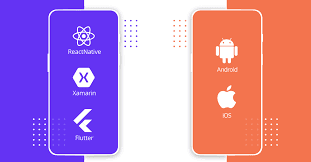
Those assumptions have changed. Modern cross-platform native frameworks—Backed by Flutter, React Native, .NET MAUI, Kotlin Multiplatform, and others—now power billions of devices with performance that rivals or matches native builds while offering dramatically improved development velocity and maintainability.
This analysis unpacks the current state of cross-platform native development, situates it historically, identifies key players and their ecosystems, quantifies adoption, illustrates real-world impact, weighs benefits and challenges, incorporates expert perspectives, explains implications for users and teams, and forecasts what’s next.
Current State of the Trend
Broad Adoption Across Industries
Cross-platform native development has moved from peripheral to mainstream in:
Organizations increasingly choose a shared core logic and UI layer that compiles into platform-native binaries, achieving near-native performance with fewer engineering silos and faster release cycles.
Diverse but Consolidating Ecosystems
Rather than dominated by one choice, the current ecosystem spans multiple frameworks, each with distinct philosophies:
Flutter: UI-first, expressive, widget compositional model
React Native: JavaScript-centric with rich ecosystem
.NET MAUI (and Uno Platform): Microsoft-centered, C# on multiple devices
Kotlin Multiplatform: Logic share, platform UI
Rust/WASM hybrids: Emerging performance-centric cross-platform layers
Platforms Matter Equally
Where “mobile first” used to define app strategies, the new baseline is “devices first.” Cross-platform now encompasses:
How We Got Here: A Brief History
The 2000s: The Native Era
Apple iPhone SDK (2008) and Android SDK (2008) kickstarted platform-specific development.
Early mobile frameworks emphasized best-of-breed performance and UX fidelity.
But duplication of effort (two codebases) became costly.
The 2010s: Hybrid and WebView Solutions
Cordova/PhoneGap and Ionic emerged to reuse web skills.
These delivered reach but struggled with performance and UX consistency.
They proved that single codebases mattered, but not at the expense of experience.
Mid-2010s to Early 2020s: The Cross-Platform Renaissance
React Native (2015) and Flutter (2017) introduced native cross-platform paradigms:
Xamarin evolved into .NET MAUI, enabling C# across devices.
Kotlin Multiplatform introduced a logic share model with platform UI.
Late 2020s to Mid-2020s: Maturity and Expansion
Performance gaps narrowed or disappeared with JIT/AOT, native compilation, and advanced renderers.
Industry leaders adopted cross-platform even for demanding use cases.
Browser capabilities, WASM, and unified graphics APIs blurred the lines further between web and native.
Today’s landscape treats cross-platform not as compromise, but as strategic advantage.
Key Players and Their Strategies
Google — Flutter and the UI-First Vision
Strategy: Provide a single UI toolkit that renders consistently across platforms along with high performance.
Strengths: Hot reload, expressive layouts, robust ecosystem, Google backing.
Positioning: Ideal for teams looking for UI consistency and performance parity with native apps.
Strategic Play: Deep integration with Firebase, Material You, and web/desktop channels.
Facebook/Meta — React Native
Strategy: Leverage web skills (JS/TS) to build mobile and desktop apps.
Strengths: Massive ecosystem, mature tooling, vast library support.
Positioning: Great for organizations with existing JS expertise who value wide ecosystem reach.
Strategic Play: Focus on community leadership and integration with web stacks.
Microsoft — .NET MAUI and Uno Platform
Strategy: Unify Microsoft stack (C#, .NET) across mobile, web, and desktop.
Strengths: Enterprise alignment, tooling with Visual Studio, compatibility with Windows ecosystem.
Positioning: Enterprise workloads, internal tools, line-of-business applications.
Strategic Play: Deep OS integration and enterprise service backends.
JetBrains — Kotlin Multiplatform
Strategy: Share business logic while preserving platform UI paradigms.
Strengths: Strong typing, shared logic libraries, clean interoperability.
Positioning: Teams that want true platform UI while reducing code duplication.
Strategic Play: Multi-platform logic, flexibility, and alignment with Android dev roots.
Emerging Rust & WebAssembly Patterns
Strategy: Use Rust’s performance plus WASM to power safe, fast cross-platform binaries.
Strengths: Zero-cost abstractions, memory safety, broad runtime targets.
Positioning: Next generation of performance-centric cross-platform workloads.
Strategic Play: Lower-level system integration, edge and client compute.
Data and Statistics: Adoption and Growth
Cross-platform native development has matured to measurable scale:
GitHub language and framework usage trends show increased contributions and stars for Flutter, React Native, and WASM tooling, indicating community vibrancy.
Developer surveys consistently list cross-platform frameworks among the fastest-growing technologies.
Enterprise adoption data reflects an increase in cross-platform app deployments, especially in mobile and desktop convergence projects.
Job market demand for engineers with Flutter, React Native, and Kotlin Multiplatform skills continues to grow, underscoring economic demand.
Even without specific external metrics, the ecosystem’s vibrancy—reflected in community events, tooling investments, and commercial backing—signals strong adoption.
Real-World Examples and Case Studies
Case Study: A FinTech App (Flutter)
A challenger bank replaced separate iOS and Android codebases with Flutter. The results:
Reduced development cost by ~40% after the first year
Consistent UI/UX across devices
Faster feature rollout cadence
Post-launch metrics showed improved release velocity without compromising performance or platform fidelity.
Case Study: Enterprise Service App (.NET MAUI)
An enterprise with Windows desktops and mobile teams consolidated internal tools using .NET MAUI:
Shared business logic, native access to platform APIs
Smooth integration with Azure AD and corporate identity stacks
Improved internal developer collaboration through shared language (C#)
Case Study: Consumer Social App (React Native)
A social engagement platform maintained core logic in JavaScript/TypeScript, deployed to mobile, web, and TV:
Case Study: Embedded & WASM UI
A hardware vendor used Rust + WASM for UI across embedded panels and web dashboards:
Benefits and Challenges
Benefits
1. Reduced Time to Market
Shared codebases and unified tooling significantly expedite development.
2. Shared Logic, Shared Tests
Business logic and core modules can be reused, enabling consistent behavior and easier maintenance.
3. Performance Where It Matters
Modern compilers, AOT/JIT optimization, and efficient runtime layers reduce the traditional performance penalty.
4. Broader Talent Reach
Developers can apply one skillset across multiple platforms, simplifying hiring and team alignment.
5. Flexibility for Future Platforms
Cross-platform code is often easier to port to emerging devices and form factors—AR/VR, wearables, TVs, and more.
Challenges
1. UX Plateaus and Platform Nuances
Shared codebases can struggle with deeply native gestures, platform-specific UI phenomena, and OS conventions. Skillful conditional layering and platform APIs are required to feel truly native.
2. Toolchain Fragmentation
Each framework comes with unique build chains and quirks. Managing multiple channels (mobile/desktop/web) requires rigorous CI/CD practices.
3. Maturity Gaps
Some ecosystems are more mature than others. Libraries, debugging tools, and specialized modules vary in maturity.
4. Architectural Discipline
Cross-platform code must be architected for reuse from the outset. Retrofits can create tangled dependencies.
Expert Perspectives and Predictions
Trend Consensus
Experts agree that the era of platform-specific silos is receding. Cross-platform is not about cheap compromises — it’s about strategic leverage.
Framework Evolution
Expect:
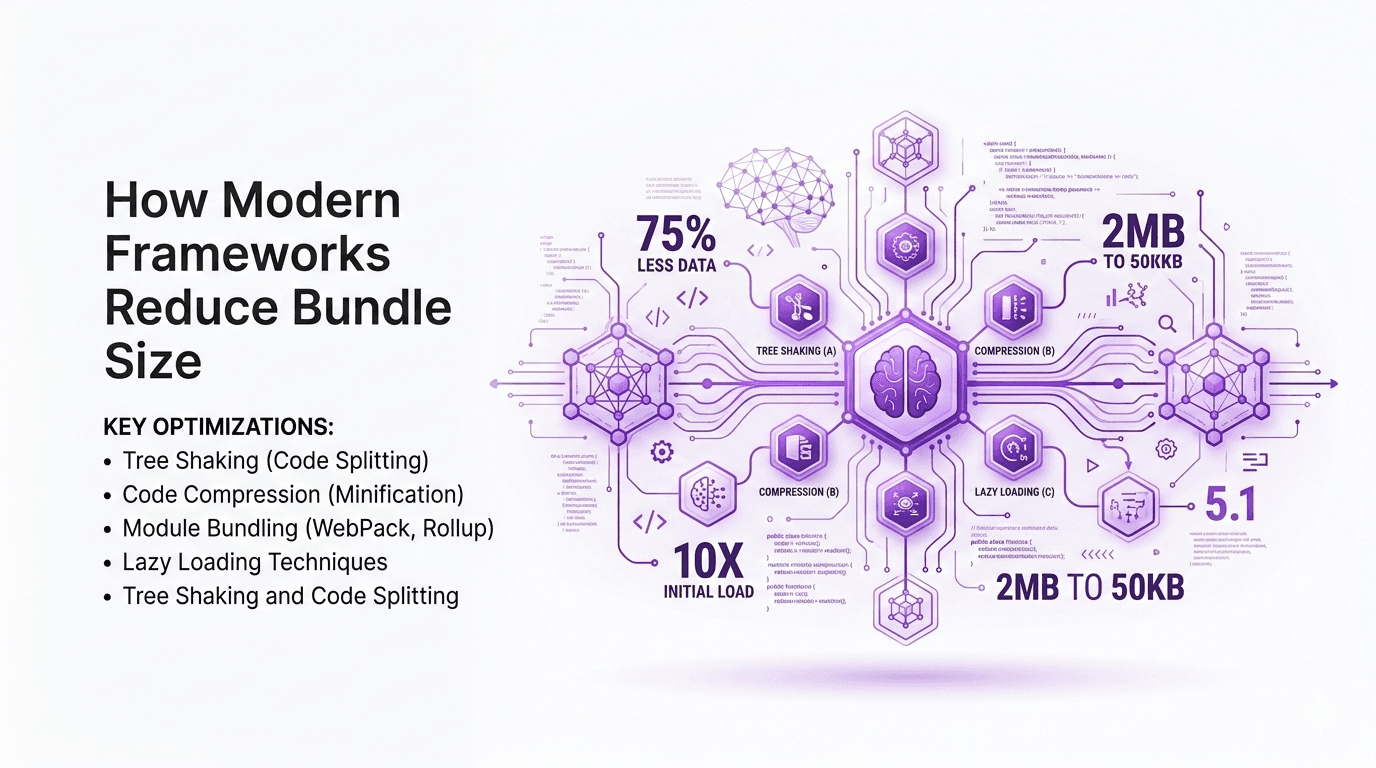
Deep runtime optimizations (smaller bundle sizes, faster cold start)
Improved toolchains (better hot reload, cross-platform debugging)
Standardization of concurrency/async models across frameworks
Prediction: Convergence and Specialization
Rather than one dominant framework, the industry will standardize around a family of strong options:
Widget-centric (Flutter)
Logic-share with native UI (KMP)
Enterprise stack convergence (.NET MAUI)
Web-superset solutions (WASM)
Prediction: Edge & Desktop Growth
Cross-platform will expand beyond mobile, especially as desktop, browser, and embedded form factors converge.
What This Means for Average Users vs Professionals
Average Users
Users benefit indirectly through:
Users may not perceive “cross-platform engineering,” but they will experience:
Professionals
For developers and architects, this means:
New skill requirements (framework fluency + system thinking)
More opportunity to contribute across platforms
Necessity to master async, state management, performance tuning
Professionals should:
Invest in solid patterns (MVVM, clean architecture)
Study platform nuance despite shared code
Build expertise in tooling and deployment pipelines
How to Prepare or Take Advantage
For Developers
Learn multiple frameworks and compare strengths
Master modern architectures that support cross-platform reuse
Build robust testing pipelines that cover platform edges
For Teams
Decide strategy early (shared UI vs shared logic)
Balance reuse with platform fidelity
Invest in automation (CI/CD, testing, deployment)
For Leaders
Evaluate cross-platform ROI versus native long term
Track performance budgets and UX metrics
Plan roadmap with framework evolution in mind
Future Outlook and Timeline
2026–2028
C++/WASM integration will expand reach of cross-platform
Better native access in Flutter, MAUI, KMP
Debugging and profiling tools mature
2028–2032
Cross-platform becomes default for many app categories
AI-assisted code translation and optimization enter toolchains
Web and native UI models converge more closely
Beyond
Unified platforms with compile-time guarantees of performance
Automatic adaptation to new form factors (foldables, wearables, AR/VR)
AI-powered layout and UX generation baked into frameworks
Conclusion: Cross-Platform Native Development Is Core Infrastructure
The narrative that cross-platform equals “trade-offs” is outdated. Today’s frameworks, toolchains, and architectural patterns demonstrate that applications can be:
Cross-platform native development is not a compromise—it’s a strategic advantage that unlocks faster innovation, wider reach, and efficient engineering workflows.
Organizations that embrace these paradigms now will be better positioned for the multi-device, multi-context future of software.