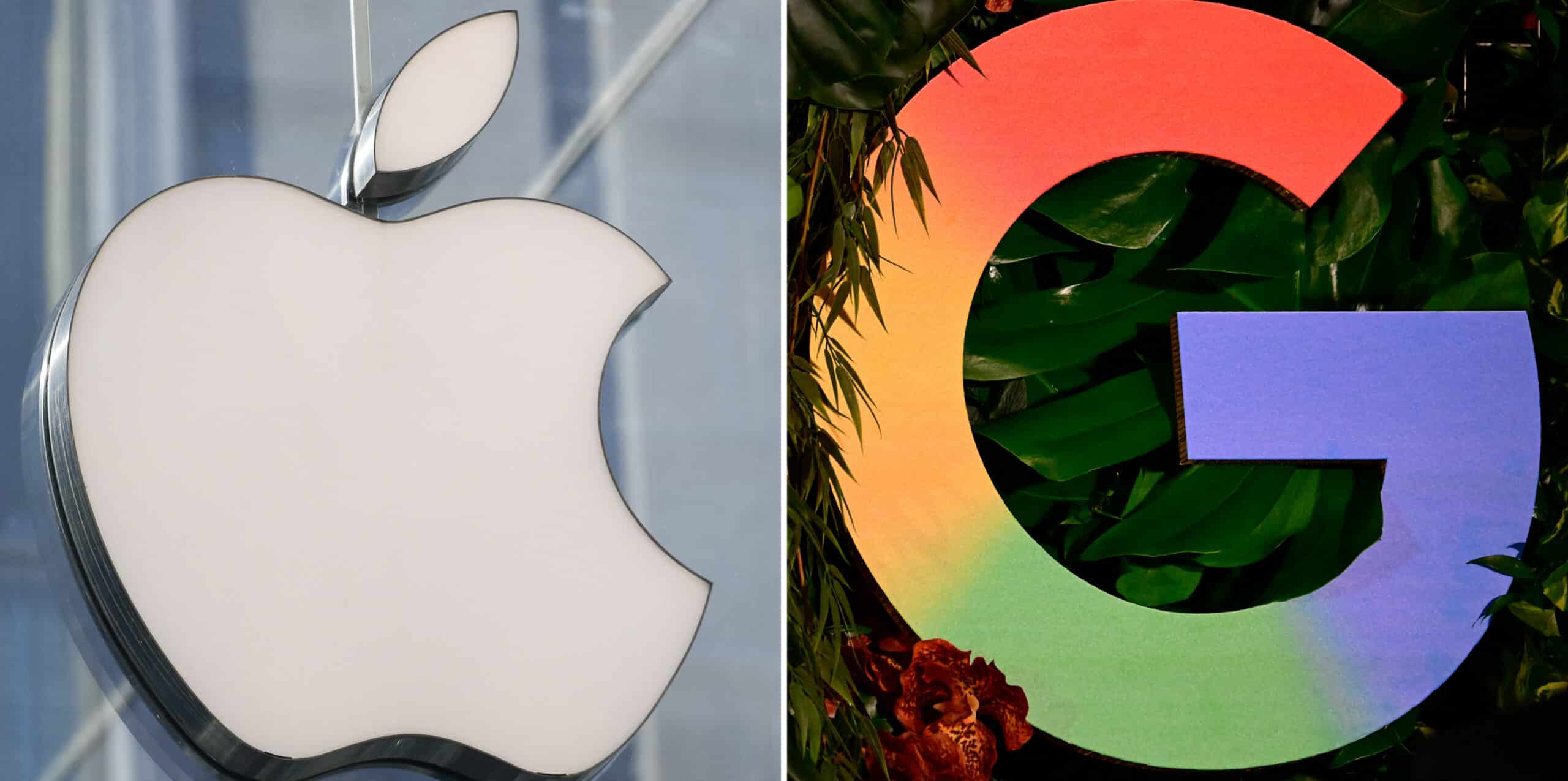
Apple has reportedly entered a multi-year agreement to integrate Google’s Gemini large language models into future versions of Siri. Rather than relying solely on its in-house AI models, Apple plans to augment Siri’s capabilities—especially in generative AI tasks—by tapping into Google’s rapidly advancing AI stack. The move follows criticism that Siri has lagged behind rivals like ChatGPT, Gemini, and Claude in conversational intelligence, reasoning, and task complexity.
While Apple will continue developing its own AI models, Gemini is expected to handle more advanced natural language understanding and generation, likely running partially on-device and partially in the cloud, aligned with Apple’s privacy-first architecture.
This partnership represents a rare moment of cooperation between two longtime rivals—and signals that the AI race is entering a phase where speed, scale, and model maturity matter more than brand purity.
The Broader Context: Why This Deal Matters
To understand why this move is so significant, you need to step back and look at how the AI landscape has shifted over the past five years.
Apple built its reputation on vertical integration—owning hardware, software, silicon, and increasingly services. For over a decade, Siri embodied this philosophy. Introduced in 2011, Siri was once revolutionary. But Apple’s cautious approach to data collection, cloud compute, and large-scale model training gradually left it behind.
Meanwhile, Google, OpenAI, and Microsoft embraced a different model:
Generative AI has changed user expectations almost overnight. People now expect assistants to:
Understand context over long conversations
Generate structured content
Reason through multi-step tasks
Integrate across apps and workflows
Siri, optimized for commands rather than cognition, simply wasn’t built for this era.
Apple’s partnership with Google is not a sign of weakness—it’s a recognition that AI leadership now requires collaboration, not isolation.
Why Apple Chose Gemini—and Not OpenAI or Anthropic
This decision becomes more revealing when you look at who Apple didn’t choose.
Why Not OpenAI?
Despite ChatGPT’s popularity, OpenAI is tightly linked to Microsoft. For Apple, relying on OpenAI would effectively deepen Microsoft’s influence across Apple’s ecosystem—strategically undesirable.
Why Gemini Makes Sense
Google’s Gemini offers several advantages:
Deep integration with mobile hardware
Proven ability to scale globally
A wide family of models (from lightweight to frontier-level)
Experience optimizing AI for consumer products
Crucially, Google understands search, assistants, and consumer intent better than anyone else. That expertise aligns directly with Siri’s role.
From Apple’s perspective, Gemini is a competitor it knows how to manage, not a wildcard partner.
What This Means for Users
Everyday iPhone and Mac Users
For most users, the benefits will be immediate and practical:
More natural conversations with Siri
Better understanding of follow-up questions
Smarter summaries, reminders, and recommendations
Improved writing, planning, and research assistance
The biggest change will be less friction. Users won’t need to “learn” how to talk to Siri anymore.
Privacy-Conscious Users
Apple is likely to maintain:
On-device processing for sensitive tasks
Private cloud compute for more complex requests
Clear user controls over data usage
However, some users will still feel uneasy knowing Google technology is involved—even indirectly.
Power Users and Professionals
Developers, writers, and knowledge workers may finally see Siri evolve from a utility tool into a genuine productivity assistant—capable of reasoning, drafting, and contextual awareness.
Implications for the Industry
1. The End of AI Isolationism
This deal signals that even the largest tech companies can no longer afford to build everything alone. AI is too capital-intensive, too fast-moving, and too complex.
2. A New Phase of “Coopetition”
Apple and Google are competitors in hardware, platforms, and services—yet collaborators in AI infrastructure. This mirrors earlier moments:
These uneasy alliances often shape the tech industry for decades.
3. Pressure on Smaller AI Labs
If Apple and Google consolidate AI power at this level, independent AI companies may struggle to compete without platform partnerships.
How This Compares to Similar Moves
Microsoft + OpenAI
Microsoft’s deep integration of OpenAI into Windows and Office reshaped productivity software. Apple’s Gemini move mirrors this—but with more emphasis on privacy and device-level intelligence.
Samsung + Google AI
Samsung already integrates Google AI deeply into Galaxy devices. Apple’s move suggests that AI partnerships are becoming table stakes, not exceptions.
Amazon + Anthropic
Amazon backing Anthropic shows a similar recognition: no single company can dominate AI alone anymore.
Potential Problems and Criticisms
1. Loss of Apple’s AI Identity
Apple risks becoming a consumer interface for someone else’s intelligence, undermining its long-held narrative of end-to-end control.
2. Regulatory Scrutiny
Given ongoing antitrust investigations into Apple–Google relationships, this deal could attract regulatory attention—especially in the US and EU.
3. Long-Term Dependence
Relying on Gemini may slow Apple’s internal AI innovation if not carefully managed.
4. User Trust Issues
Some users may object to Google’s involvement on principle, regardless of technical safeguards.
Historical Context: Siri’s Rise and Stall
Siri’s early lead was built on:
But the AI world shifted toward:
Apple deliberately avoided these paths for privacy and control reasons. The Gemini partnership represents a course correction, not an abandonment of values.
Strategic Commentary: A Calculated Compromise
From a strategic standpoint, Apple’s decision reflects:
Urgency: Siri could not remain stagnant
Realism: Building frontier AI alone would take years
Confidence: Apple believes it can wrap Gemini in its own UX, privacy, and silicon advantages
This is not Apple conceding leadership—it’s Apple buying time while it retools internally.
What This Means for Different User Segments
User TypeImpactCasual UsersSmarter, more helpful Siri with minimal learning curveProfessionalsBetter productivity, planning, and writing supportDevelopersNew APIs and AI-driven app experiencesPrivacy AdvocatesMixed feelings, but likely strong safeguardsCompetitorsIncreased pressure to match Apple-level UX + AI
Predictions: What Happens Next
Hybrid AI Architecture
Siri will combine Apple models + Gemini + on-device neural engines.
Tiered AI Experiences
Basic tasks on-device, advanced reasoning in the cloud.
Expanded Siri Roles
Siri will move beyond commands into planning, summarization, and decision support.
Apple’s Long-Term Exit Plan
Over time, Apple may reduce reliance on Gemini as its own models mature.
Final Analysis: A Deal That Redefines the AI Era
Apple turning to Google’s Gemini is not a surrender—it’s an acknowledgment that AI leadership now depends on speed, scale, and collaboration as much as secrecy and control.
This partnership reshapes the assistant wars, blurs old rivalries, and signals a future where the best AI experiences are built not by isolation, but by strategic compromise.
For users, it promises a long-overdue evolution of Siri.
For the industry, it marks the beginning of a new AI power structure.
And for Apple, it may be the most important AI decision since Siri’s launch itself.