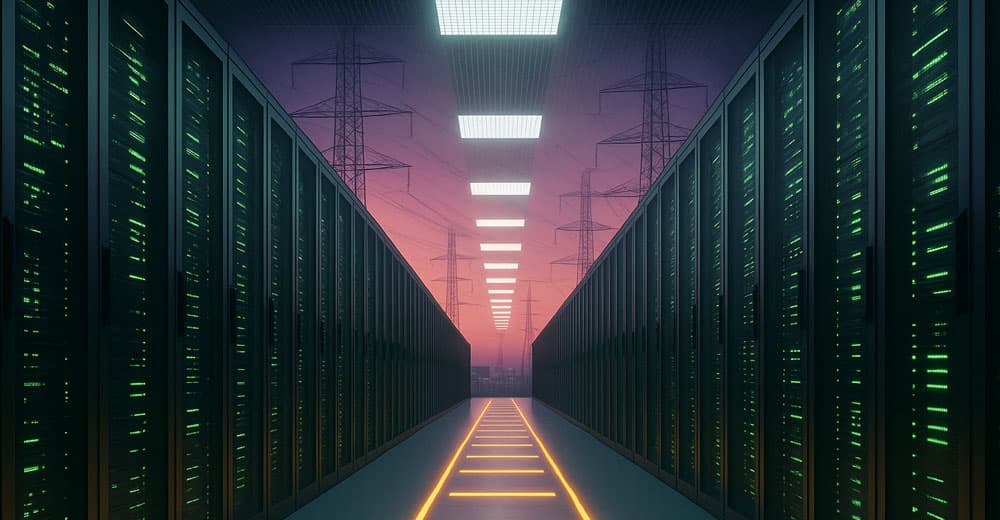
With energy demand soaring — largely due to the growth of data centers supporting a burgeoning AI industry — concerns have arisen about where the nation will find the energy capacity to meet its power needs.
A new report by the Information Technology and Innovation Foundation (ITIF) argues that capacity can be found in the near- and medium-term, giving power providers the time they need to add infrastructure to the existing grid and meet longer-term electricity demand.
“However, such a solution will not arrive on its own,” wrote the author of the report, Robin Gaster, research director for ITIF’s Center for Clean Energy in Washington, D.C. “Without significant action across multiple fronts and at substantial scale, the existing grid will come under increasing pressure — and we can expect a massive struggle for access.”
“Regulators will be caught between the sudden growth in demand and political pressure to service existing commercial and residential customers first, while keeping a lid on prices,” he explained.
One of the significant drivers of the growing electricity demand appears to be data centers, the report noted, prompting calls to slow their growth or even prevent them from connecting to the grid altogether.
“Slowing data center growth or prohibiting grid connection is a short-sighted approach that embraces a scarcity mentality,” argued Wannie Park, CEO and founder of Pado AI, an energy management and AI orchestration company, in Malibu, Calif.
“The explosive growth of AI and digital infrastructure is a massive engine for economic, scientific, and industrial progress,” he told TechNewsWorld. “The focus should not be on stifling this essential innovation, but on making data centers active, supportive participants in the energy ecosystem.”
“Data centers are the engine of the AI economy, but they can’t be passive loads anymore,” he said. “Data centers can and should be active partners that contribute to grid stability and resilience, not just consume power. Prohibiting growth would simply limit the innovation needed to solve the power crunch in the first place.”
Smart Integration Needed
The reality is the U.S. has dramatically underinvested in long-term grid upgrades and planning, maintained Scotty Embley, an associate with Hi-Tequity, a data center development and investment firm, in Melbourne Beach, Fla. Slowing data center builds equates to slowing vital applications such as banking, federal, health care, and transportation, he told TechNewsWorld.
However, he acknowledged that early coordination with utilities is necessary to ensure new facility locations are strategically planned and responsibly powered, where adequate grid support is available.
Instead of restricting data center development, the focus should be on smarter integration with the grid, added Allan Schurr, chief commercial officer at Enchanted Rock, a provider of natural gas-powered microgrids, in Houston.
Planning for the full lifecycle of a data center’s power needs — from construction through long-term operations — is essential, he continued. This approach includes having solutions in place that can keep facilities operational during periods of limited grid availability, major weather events, or unexpected demand pressures, he said.