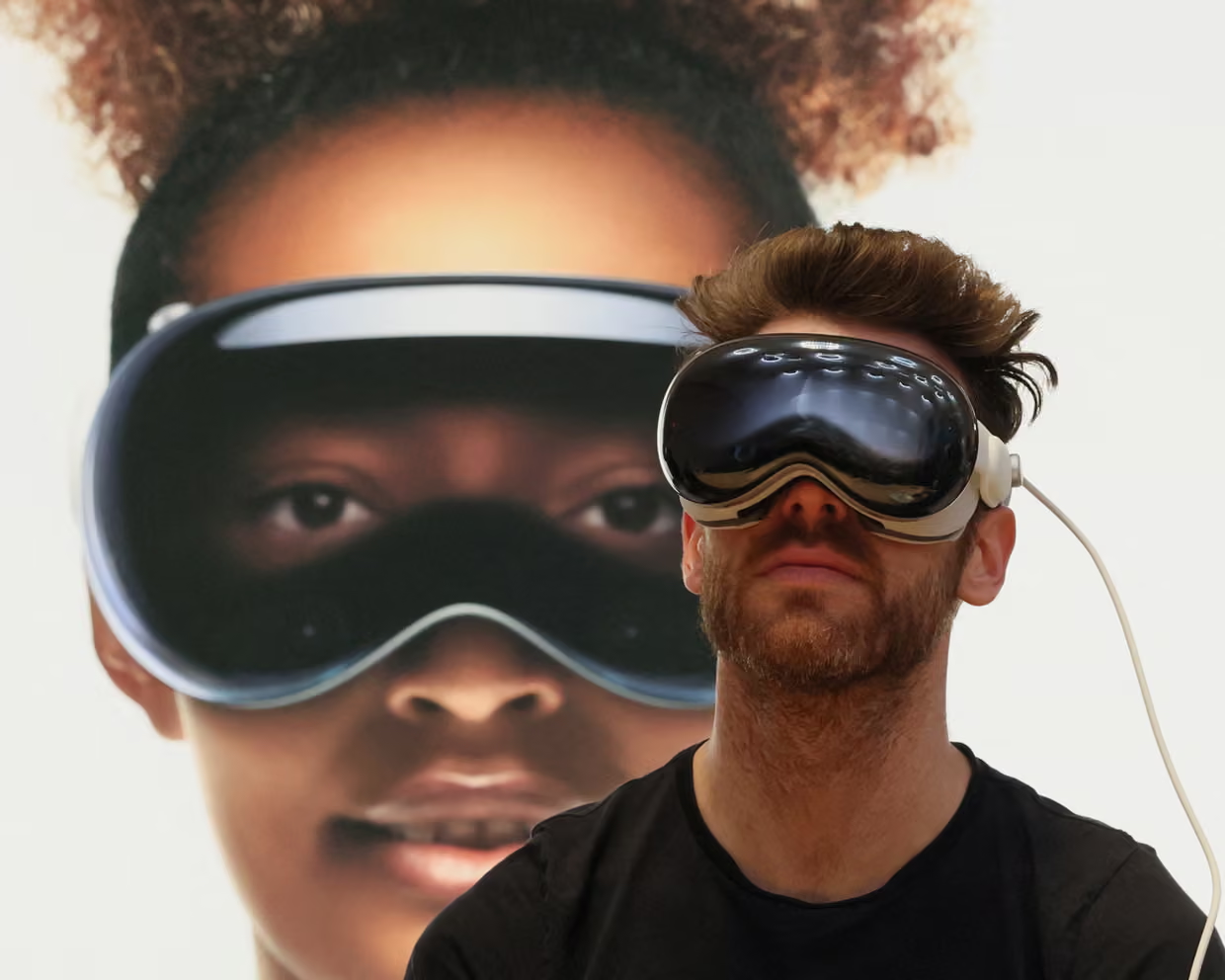
Apple is reportedly cutting production of its Vision Pro mixed-reality headset in response to weaker-than-expected sales performance, according to industry reports. The move reflects growing concerns about demand for high-end augmented reality (AR) and virtual reality (VR) devices and may signal a strategic reassessment of Apple’s ambitious AR/VR ambitions.
Introduced with much fanfare, the Vision Pro was positioned as a breakthrough product — combining immersive spatial computing with Apple’s polished hardware and software ecosystem. Yet despite its innovative technology and premium design, the headset has struggled to attract mainstream buyers, leading Apple to scale back manufacturing plans.
Vision Pro: A Bold Leap Into AR/VR
Apple’s Vision Pro represented the company’s first full-scale foray into spatial computing — a category that blends virtual environments with real-world interaction. Packed with advanced sensors, high-resolution displays, and eye-tracking capabilities, the headset was lauded for its technological achievements.
Apple marketed the Vision Pro as more than a niche gadget. The headset promised:
Immersive entertainment experiences
Augmented productivity tools
Seamless integration with Apple devices
Intuitive gesture and eye-tracking controls
Given Apple’s track record of redefining categories — from smartphones to tablets — expectations were high that Vision Pro could shape the future of computing.
Why Sales Fell Short
Despite the hype and positive early impressions from reviewers, the Vision Pro has faced several challenges that contributed to its lower-than-anticipated sales:
1. Premium Price Point
One of the biggest obstacles for the Vision Pro has been its premium price. Positioned at the high end of the headset market, the device is significantly more expensive than competing VR headsets and many consumer electronics products.
For many potential buyers, the cost remains a barrier — especially when mixed-reality use cases are still emerging and not yet part of everyday tech routines.
2. Narrow Use Cases
While the Vision Pro excels in immersive visuals and spatial experiences, the practical everyday use cases have been perceived as limited. Beyond select entertainment and creative applications, many consumers struggle to justify purchasing an expensive headset that they may only use occasionally.
Broader adoption often hinges on compelling, day-to-day utility — something that has yet to fully materialize for many users.
3. Competitive Market Dynamics
The AR/VR market has become increasingly competitive, with devices at various price points from established brands and startups. Many of these alternatives appeal to gamers or specific enterprise segments, making it difficult for a premium, all-purpose headset like Vision Pro to find its footing.
Additionally, some competitors emphasize affordability over cutting-edge specs, drawing cost-sensitive buyers away from high-end hardware.
4. Adoption Hesitation
Headsets and wearable tech often face an adoption curve influenced by comfort, content availability, and consumer habits. The Vision Pro’s unique form factor and relatively nascent app ecosystem may have contributed to slower uptake, as users weigh comfort and content options before committing.
Production Cuts: What It Means
Production cuts typically reflect a company’s response to demand signals from the market. In Apple’s case, scaling back Vision Pro manufacturing suggests the company is adjusting expectations after initial sales data fell short of forecasts.
This move could have several implications:
Inventory adjustments to prevent overstock
Reallocation of resources toward more profitable product lines
Reevaluation of AR/VR strategy and pricing
Some industry analysts view this change not as a retreat, but as a strategic realignment — allowing Apple to focus on refining the Vision Pro, enhancing software experiences, and positioning future iterations for broader appeal.
Future of Apple’s AR/VR Vision
Despite production cuts, Apple is widely expected to continue investing in AR/VR technologies. The Vision Pro laid important groundwork by establishing Apple’s spatial computing platform and demonstrating hardware innovation.
Future direction may include:
Software updates to expand utility and content offerings
Lower-cost hardware iterations to attract mainstream buyers
Enterprise and professional market focus with specialized applications
Apple’s broader ecosystem — including iOS, iPadOS, and macOS — provides unique opportunities to integrate spatial computing into productivity, creativity, and entertainment workflows.
Industry Reaction and Consumer Expectations
Market observers have offered mixed reactions to the Vision Pro production cut news. Some see it as a wake-up call for Apple and the entire AR/VR sector, highlighting the need for compelling content, practical use cases, and accessible pricing. Others view it as a natural step in the evolution of an emerging product category — one where early iterations serve as platforms for future innovation.
For consumers, the key question remains: Can Apple make spatial computing indispensable?
Developers and creators continue to experiment with AR/VR experiences, and as software matures, hardware adoption may follow. The Vision Pro’s story so far underscores that technological breakthroughs alone may not be enough without an ecosystem of meaningful, everyday applications.
Conclusion
Apple’s reported production cuts for the Vision Pro headset reflect the challenges of launching high-end mixed-reality devices in a market still defining its mainstream relevance. High prices, limited use cases, and competitive pressures have contributed to slower sales, prompting Apple to recalibrate production plans.
However, this adjustment does not signal the end of Apple’s AR/VR ambitions. Instead, it may provide valuable insights that will shape the next generation of Vision hardware and help the company refine how it delivers spatial computing experiences to a broader audience.
As Apple continues to innovate and developers expand the ecosystem, the future of mixed reality may still hold significant promise — even if the pace of adoption takes longer than initially anticipated.