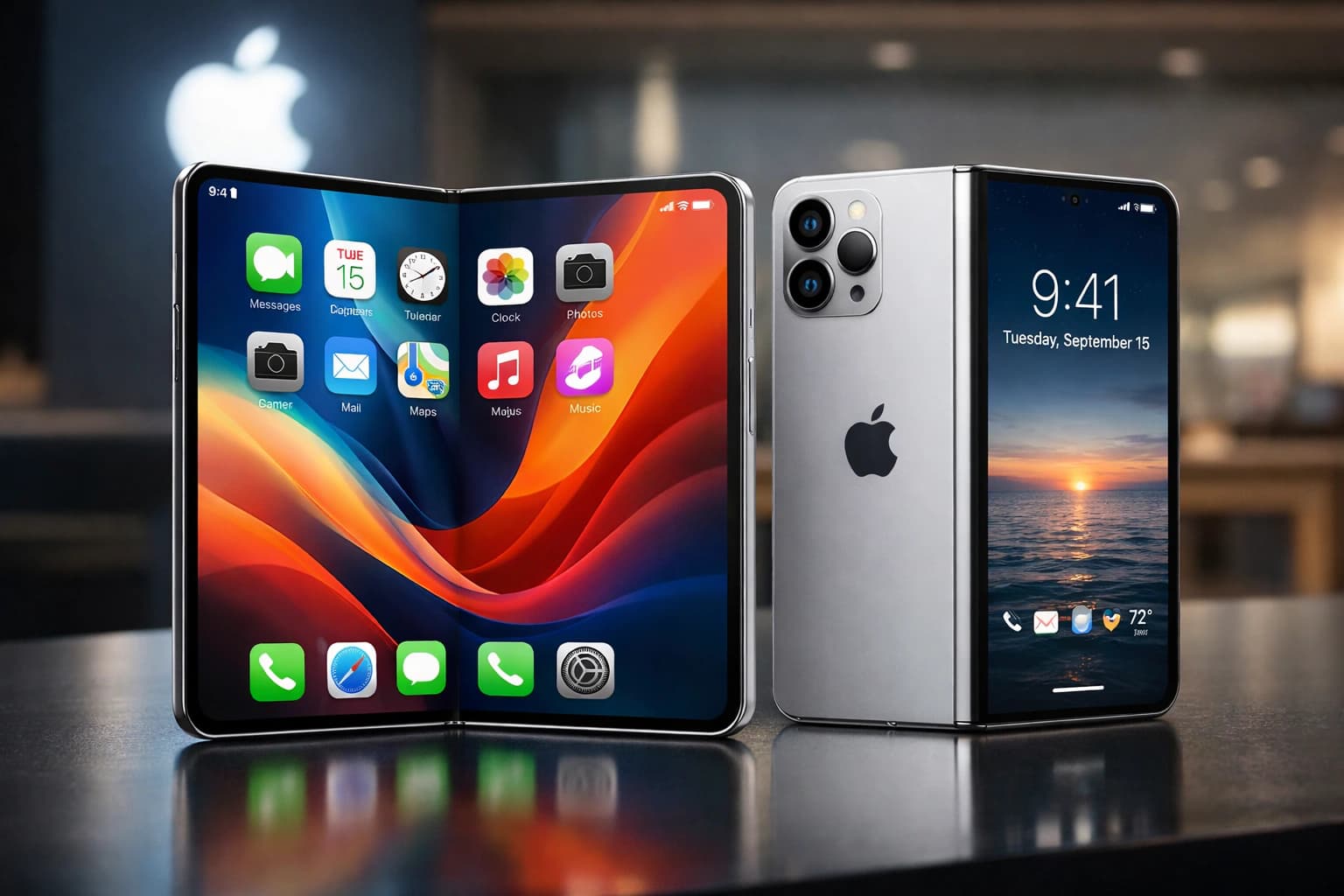
Apple is finally gearing up to enter the foldable smartphone market with its most ambitious handset yet: the iPhone Fold. Years after competitors like Samsung, Google, and Motorola launched folding devices, Apple’s first foldable iPhone may arrive as early as late 2026 — a move that could reshape the high-end smartphone landscape.
When Can You Expect the iPhone Fold?
According to recent reporting, Apple is likely to unveil the iPhone Fold in the second half of 2026, possibly at its annual autumn event alongside the iPhone 18 Pro and Pro Max. Multiple industry analysts have pointed out that production and official launch schedules remain fluid, and supply constraints might delay wide availability into early 2027 — though an announcement in 2026 remains the most consistent projection.
Apple has taken a cautious approach to foldable technology, focusing on durability, hinge quality, and software optimization before releasing its first model. This is likely why the company is only now ready to compete in a category that brands like Samsung have dominated for years.
Design & Display: What to Expect
The prevailing rumor — echoed by credible supply chain reports — is that the iPhone Fold will adopt a book-style design. This means it will open like a book, much like the Samsung Galaxy Z Fold series, with an external display on the outside and a larger inner display when unfolded.
Analysts like Ming-Chi Kuo suggest the device could feature a 5.5-inch outer screen and roughly 7.8-inch internal display, giving users extra screen real estate for multitasking, productivity, and media consumption. Some leaks even point toward cutting-edge OLED panels with minimal crease visibility, a critical aspect of foldable design that Apple hopes to improve upon.
A book-style fold factor allows the device to better bridge the gap between a traditional iPhone and a tablet-like experience while preserving a premium build quality.
Performance and Hardware Highlights
As expected from Apple, the iPhone Fold is rumored to pack top-tier performance, possibly powered by a next-generation Apple Silicon chip — likely similar to or an iteration of the A20 series used in flagship iPhone 18 models. This should ensure smooth multitasking and enhanced performance for demanding applications.
Other anticipated hardware features include:
A high-density battery to support the dual displays without sacrificing battery life.
A premium hinge mechanism designed to minimize screen crease and improve long-term durability.
A premium build, potentially involving titanium or a high-grade alloy, for robust structural integrity.
Interestingly, some reports suggest that Apple might ditch the traditional Dynamic Island cutout in favor of a punch-hole display design, especially on the outer screen — a shift from recent iPhone design language.
Software and User Experience
Foldable devices demand more than just hardware innovation — they require software that adapts to changing screen sizes fluidly. Apple has a strong track record of optimizing its operating systems, and many expect iOS or a hybrid iOS-iPadOS interface that scales elegantly between folded and unfolded states.
This could include:
Enhanced multitasking with split-screen app support.
Dynamic app scaling for better productivity.
Seamless transition of interfaces between displays.
Such software refinements could allow the iPhone Fold to capitalize on its hardware, creating a more intuitive and powerful user experience than existing foldables.
Challenges and Expectations
Launching a foldable iPhone comes with significant challenges:
Manufacturing complexity could delay shipment volumes or limit initial availability.
Competing with established foldables like Samsung’s Galaxy Z Fold and Google’s Pixel Fold means Apple must deliver a compelling differentiator.
Price sensitivity may affect adoption outside premium user segments.
Despite these challenges, Apple’s entry into foldables is widely seen as a milestone that could push other manufacturers to innovate faster and redefine expectations for premium smartphones.
Conclusion
After years of speculation and leaks, the iPhone Fold appears bound for a 2026 debut, offering Apple’s take on foldable design, cutting-edge hardware, and a high-end user experience. With its book-style form factor, powerful internals, and rumored software enhancements, the iPhone Fold could finally usher Apple into the foldable era — albeit at a premium price.
Whether this device becomes mainstream or remains a niche luxury product, it will undoubtedly be one of the most talked-about phones of the year.