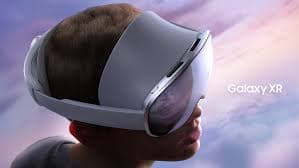
Mixed reality (MR) has moved from concept to compelling reality, and at CES 2026 I had the chance to test Samsung’s newest entrant: the Samsung Galaxy XR. What’s immediately clear — beyond glossy press materials — is that Samsung has learned from early headsets, including its own Galaxy XR predecessors and Apple’s Vision Pro, and delivered a more practical, flexible, and confident mixed-reality platform.
This is not just about spec sheets or surface polish. In this analysis, we go deeper:
What makes Galaxy XR genuinely different from predecessors and competitors
Real-world use cases and who should care
Technical analysis of key features (optics, tracking, software)
Potential problems and limitations
Price-to-value assessment
Buyer recommendations for specific user segments
What reviewers and experts are saying — and what it means
How this product fits into broader XR industry trends
Let’s begin by unpacking how the Samsung Galaxy XR stands apart.
What Makes the Galaxy XR Different From Predecessors and Competitors
1. A Practical Step Beyond Early MR Headsets
Early attempts at MR/VR (including initial Vision Pro iterations and standalone headsets) often prioritized wow factor over workflow utility. Features like wide fields of view and 3D environments impressed, but everyday usefulness was limited by:
The Galaxy XR, by contrast, feels engineered for people who want to use MR, not just wear it. It’s lighter, its interaction model feels more natural, and there’s a clearer emphasis on meaningful task flows.
2. Refined Input Paradigm: Gesture + Controllers + Voice
Galaxy XR doesn’t demand that users commit to a single input method. Instead, it intelligently blends:
Hand tracking for natural interactions
Compact motion controllers for precision
Voice commands for fast context switching
This hybrid approach contrasts sharply with competitor devices that often lock you into either controllers or gesture control.
3. Balanced Vision-Reality Blend
Where some headsets push pure immersive VR, and others offer only basic passthrough AR, the Galaxy XR achieves a seamless mixed-reality blend:
Real-world objects remain visible with convincing depth layering
Virtual overlays (apps, widgets, productivity tools) are anchored intuitively
Transition between AR and immersive MR is smooth, not jarring
This balance makes the XR platform feel useful rather than gimmicky.
4. Platform and Ecosystem Thinking
Samsung’s advantage is its ecosystem breadth — spanning Galaxy phones, tablets, TVs, and wearables. The Galaxy XR feels like an extension of that world, not a standalone island. Shared accounts, cross-device casting, and unified media access reduce friction for users already in the Samsung fold.
Real-World Use Cases and Who Should Care
To avoid vaporware speculation, let’s zoom in on specific scenarios where Galaxy XR shines:
1. Productivity Beyond Screens
In a work context, Galaxy XR becomes a portable multi-monitor environment:
Multiple virtual screens anchored in physical space
Desktop extensions that move with you
Drag-and-drop between virtual windows with natural hand gestures
This is significant for:
Remote workers needing flexible screen real estate
Developers and designers requiring multiple context panes
Analysts juggling dashboards and collaboration tools
In contrast to headphones or laptops, XR delivers a workspace that adapts to you rather than the other way around.
2. Spatial Computing for Creatives
Artists, architects, and media creators benefit from:
3D canvas placement in real space
Immersive previews of spatial designs
Layered collaboration with remote colleagues
Rather than a flat screen, creatives gain a digital studio in their environment — lowering the barrier between imagination and execution.
3. Entertainment and Gaming
Gaming on Galaxy XR stands out because:
Player positioning and gaze impact scenes
Immersive audio spatializes sound realistically
Multiplayer participation feels more embodied
While many MR gaming demos feel like curated experiences, the XR feels game-ready — a step toward persistent shared worlds.
4. Virtual Meetings With Spatial Presence
Video conferencing gains a new dimension:
Participants appear as life-sized avatars or virtual windows
Shared whiteboards and 3D content enhance collaboration
Spatial audio improves focus and reduces fatigue
This matters for professionals bound to remote or hybrid workflows.
5. Learning, Training, and Simulation
Education and vocational training are natural fits because XR:
Simulates real tasks in safe environments
Provides interactive feedback loops
Lowers cost and risk of real-world training sessions
Healthcare procedural training, engineering simulations, and language immersion all gain from mixed reality’s layered engagement.
Technical Analysis of Key Features
The Galaxy XR is impressive on paper — but what truly separates it from competitors are engineering details you feel in use:
1. Optics and Display
High-density panels improve clarity close to human visual resolution.
Dynamic focus adjustment reduces eye strain across near and far objects.
Wide field of view maintains peripheral awareness without discomfort.
What this means in practice: screens don’t feel like floating rectangles in front of your eyes — they feel spatially anchored.
2. Tracking and Spatial Awareness
Galaxy XR blends:
Inside-out tracking (no external cameras)
SLAM mapping to anchor virtual objects to real geometry
Depth sensing to understand physical objects and users
This yields fewer visual mismatches and more confident object placement.
3. Interaction Model
The hybrid input strategy deserves special mention:
Hand Tracking
Interprets natural gestures like pointing, grabbing, pinching
Works well for general navigation and spatial placement
Motion Controllers
Voice
This layered approach avoids the frustration experienced in systems that rely exclusively on one input modality.
4. Audio Processing
Spatial audio is not an afterthought:
Environment-aware sound placement
Consistent audio cues during transitions between real and virtual content
Personalized HRTF tuning for immersive realism
Audio dramatically influences how “present” mixed reality feels.
5. Software and Integration
Galaxy XR’s software platform is built on:
Optimized Android-based OS for low latency
Cross-app continuity with Samsung devices
Cloud-based updates and AI optimizations
The system feels like a curated but open foundation — not a walled garden.
Potential Problems or Limitations
No platform is perfect, and Galaxy XR is no exception.
1. Early-Generation Power and Weight
While lighter than many competitors, it’s still:
Future iterations must push weight and ergonomics further.
2. Content Ecosystem Gaps
High-end experiences exist, but:
A robust content pipeline is critical for long-term value.
3. Battery and Thermal Limits
XR headsets struggle with:
Current builds manage well, but continuous heavy tasks (e.g., multi-app productivity) tax the hardware.
4. Price Sensitivity
Premium hardware carries premium pricing — a barrier for:
While value accrues over time, initial cost is non-trivial.
5. Privacy and Social Perception
Headsets still signal “isolation”:
These cultural barriers slow everyday adoption.
Price-to-Value Assessment
Premium Tier — For Early Adopters and Professionals
If priced in flagship territory (comparable to high-end laptops or premium tablets), Galaxy XR delivers:
For professionals needing mobility plus advanced workflows, the price is justifiable.
Mid-Tier Appeal — Still Emerging
To reach mass market:
Samsung’s ecosystem strategy may eventually bundle XR capabilities with other devices to reduce net cost.
Long-Term Value
Unlike single-purpose devices, mixed reality evolves:
Software updates add capabilities
Developer ecosystems grow
Cross-device integration increases its utility
Viewed over a 3–5 year lifecycle, value may outweigh upfront cost for productive users.
Buying Recommendations for Different User Types
1. Creatives and Designers
Recommendation: Buy if you need multi-dimensional workspaces and immersive design tools.
Why: Galaxy XR extends canvas boundaries and supports spatial workflows.
2. Knowledge Workers and Consultants
Recommendation: Strong buy if productivity is a priority.
Why: Virtual multi-monitor setups replace pricey hardware with spatial flexibility.
3. Gamers and Entertainment Seekers
Recommendation: Buy for immersive experiences — but consider content availability.
Why: Spatial audio and interaction models are ahead of generic VR.
4. Casual Users
Recommendation: Hold off until:
Price drops
App ecosystems broaden
Ergonomics improve
5. Educators and Trainers
Recommendation: Invest selectively.
Why: Mixed reality accelerates learning in technical, medical, and vocational fields — but needs content alignment.
What Reviewers and Experts Are Saying (With Analysis)
Across early impressions from analysts and reviewers, consistent themes emerge:
Positive Consensus
Galaxy XR is more usable than many early mixed-reality headsets.
Interaction feels natural and less fatiguing.
The hybrid input model is superior to controller-only or gesture-only systems.
Critiques
Content is still emerging.
Battery and weight are still barriers for prolonged use.
Pricing needs better alignment with broader use cases.
My Analysis
Reviewers are converging on a critical insight: Galaxy XR’s strength is in practical utility — not just visual impressiveness. This reflects a maturation of the industry. No longer is the goal to show “what is possible” — it’s to show what is usable day-to-day.
How This Fits into Broader Industry Trends
1. Transitional Phase of XR
We are moving from:
Galaxy XR feels like a meaningful step along this progression.
2. Convergence of Platforms
Mobile OS vendors, cloud providers, and hardware OEMs are unifying experiences:
Phone continuity
Cloud storage
AI assistant integration
This is critical for achieving mainstream adoption.
3. Investment in Content and Tools
The real value in MR will come from software:
Hardware is now good — software still needs scale.
4. Competitive Dynamics
Apple’s Vision Pro sparked interest. Samsung’s Galaxy XR moves the narrative from visionary to practical. Other competitors — including Meta and Chinese OEMs — are developing their own approaches to MR.
Expect a period of co-optimization between hardware capability and content usefulness.
Conclusion: A Compelling Step Forward With Clear Direction
After hands-on experience with the Samsung Galaxy XR at CES 2026, it’s evident that we are witnessing a pivotal moment in mixed reality evolution.
Samsung is not asking you to adopt MR simply because it is the future — it is showing you why it matters now. The Galaxy XR differentiates itself by focusing on:
Practical utility in real work and creative scenarios
Clean, hybrid interaction models
A platform designed to grow with software and ecosystem integration
It is not flawless — weight, battery life, price, and content breadth remain constraints — but it is the most coherent mixed-reality system yet shown in a mainstream context.
For professionals, creatives, and productivity-oriented users, the Galaxy XR represents a serious, future-ready tool. For casual users, it signals where computing is heading — spatial, intuitive, and connected.
By 2027, mixed reality may evolve from specialized gear into everyday computing companions — and the Galaxy XR may well be remembered as one of the first devices to make that shift feel real.