Samsung has long been a leader in the foldable smartphone space, but its latest innovation — the Samsung trifold phone — marks the company’s boldest design yet. Combining three screens into one device, the trifold concept is meant to push the boundaries of mobile computing. However, early reviews suggest that while the hardware is impressive, the overall experience may feel expensive and half-baked, particularly for mainstream consumers.
This new trifold handset aims to bridge the gap between traditional smartphones and mini tablets, offering a larger, more versatile display area. Yet despite its innovation, many critics highlight that the product’s steep price, awkward usability, and lingering software shortcomings undermine its potential.
A Look at the Trifold Design
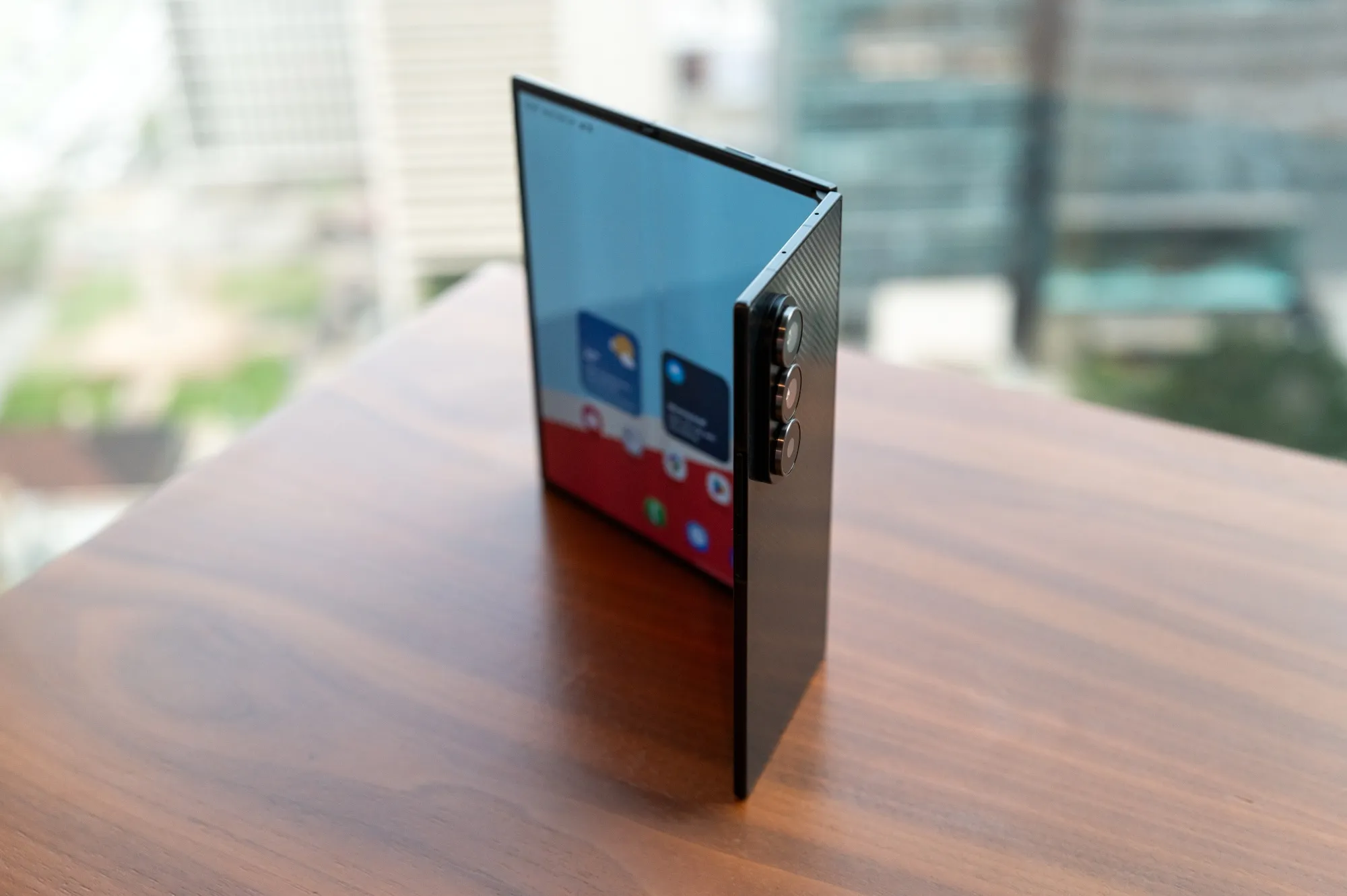
At first glance, the trifold phone feels like a bold leap forward. Instead of the typical single fold design found in devices like the Galaxy Z Fold series, this model features three interconnected display panels that unfold into a large, tablet-like screen. The idea is to offer more screen real estate without the need for additional devices, catering to users who desire productivity and entertainment on the go.
The trifold design delivers a nearly seamless large display when fully opened, with minimal creases and a sleek hinge mechanism. The middle screen acts as the primary interface — perfect for watching videos, multitasking, or reading documents — while the outer screens offer flexibility for traditional phone use.
However, this ambitious hardware also brings challenges. The extra moving parts mean more complexity in weight distribution, hinge durability, and overall ergonomics. Many early users report that the device feels bulkier and heavier than expected, making prolonged one-handed use uncomfortable.
The Price Tag Problem
One of the most frequently cited issues with Samsung’s trifold phone is its premium price tag. Positioned well above most flagship devices on the market, this trifold handset targets a niche group of early adopters and tech enthusiasts rather than everyday users.
The high cost raises a key question: Is the trifold experience worth the premium? For some, the answer remains unclear. While the larger screen is undeniably impressive, many argue that similar productivity and multimedia experiences can already be achieved with existing foldable phones, tablets, or ultra-wide displays at a lower cost.
Because of the price, some reviewers suggest that this device may function more as a statement of innovation than a practical product ready for mass adoption.
Software Challenges and Usability Issues
Beyond hardware and pricing concerns, the trifold phone currently struggles with software optimization — a critical factor for devices with multiple displays.
Unlike traditional smartphones, a trifold phone must intelligently manage content across three screens. Ideally, apps should adapt fluidly as the device unfolds or folds, but early impressions indicate that many apps still feel clunky or poorly adapted to the unique form factor. Users have reported inconsistent behavior when dragging content between panels, odd scaling on the three-panel display, and occasional app crashes when switching modes.
Another usability challenge stems from the learning curve. The trifold design introduces new gestures and interaction patterns that are unfamiliar to most users. Without clear guidance or well-developed tutorials, many find it difficult to fully utilize the potential of three screens — especially in multitasking environments.
Battery Life and Hardware Trade-Offs
The trifold form factor also places pressure on battery performance. Driving three large display panels requires significant power, and the current battery solution struggles to keep pace with heavy usage. Users engaging in productivity tasks across multiple screens or streaming high-resolution content report noticeably faster battery drain compared to traditional flagship phones.
Additionally, the device’s weight and thickness — features often unavoidable in complex foldables — make it less pocket-friendly and less convenient for everyday carry.
Is the Trifold Future Ready?
While Samsung’s trifold phone showcases the company’s engineering prowess and willingness to experiment with form factors beyond the mainstream foldable, the device raises questions about its readiness for the average consumer.
The concept holds promise: bigger screens, enhanced multitasking, and a step toward replacing tablets with phones. However, the execution still feels tentative. Software optimization, ergonomic comfort, battery efficiency, and mainstream appeal all need significant refinement before the trifold form factor can become widely adopted.
The trifold’s current iteration might best be described as a visionary prototype rather than a fully realized commercial product. It offers a glimpse into what mobile computing could become, but not yet what it should be for the everyday user.
Final Thoughts
Samsung’s first trifold phone is undeniably ambitious — blending innovation with bold design choices. But ambition alone cannot make a device successful in a competitive and rapidly evolving market.
With a high price, software and usability challenges, and limited everyday practicality, the trifold phone may be more intriguing than indispensable. Samsung’s effort signals the future possibilities of mobile technology, yet it also highlights how far manufacturers still have to go before revolutionary form factors are ready for the mainstream.
For now, the trifold remains a fascinating experiment — one that deserves recognition for pushing boundaries, but also a reminder that innovation must be matched by thoughtful execution.