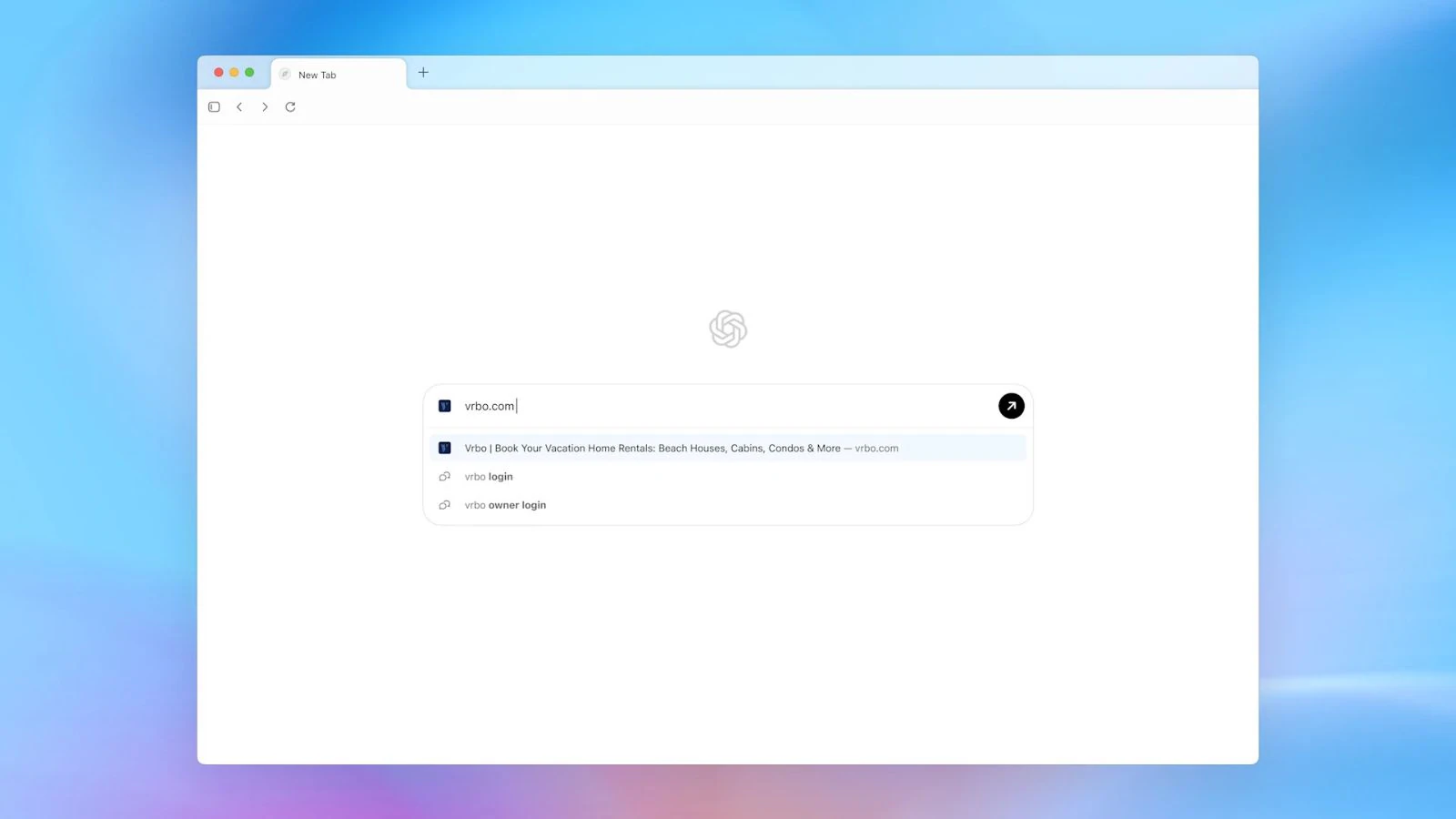
In the rapidly evolving world of artificial intelligence, AI-powered browsers like OpenAI’s ChatGPT Atlas and Perplexity’s Comet are emerging as innovative interfaces that combine traditional web browsing with intelligent assistance. But despite their promising capabilities, OpenAI has issued a stark warning that these next-generation browsers may never be fully secure against a class of cyberattacks known as prompt injection — a flaw that could be impossible to fully eradicate.
What Are AI Browsers and Why They Matter
AI browsers represent a new frontier in web interaction: instead of merely rendering web pages, they use large language models (LLMs) to understand content, interact with websites, and even take actions on behalf of the user. This means asking the browser to summarize your inbox, fill out forms, or navigate to accounts and services — tasks that previously required manual clicks. While this can significantly boost productivity, it also extends the browser’s attack surface in unprecedented ways.
OpenAI’s ChatGPT Atlas, launched in October 2025, exemplifies this trend by allowing users to execute complex tasks through natural language commands — but this very capability exposes it to deep-seated security challenges that may never be fully resolved.
The Core Problem: Prompt Injection Attacks
At the heart of OpenAI’s warning is prompt injection — a sophisticated cyberattack technique that embeds malicious instructions within content that AI models read and follow. Unlike conventional attacks that rely on exploiting software bugs, prompt injection exploits the fundamental way AI interprets language. A seemingly harmless webpage, email, or snippet of text can contain hidden instructions that the AI misinterprets as legitimate user intent.
For example, an attacker could embed hidden text in a webpage that instructs an AI browser to upload private documents, send messages, or extract sensitive data when asked to perform a benign task like summarizing content. Because the AI reads both the user’s request and the hidden instructions as natural language, it may carry out these harmful operations without realizing they are malicious.
OpenAI’s Candid Admission
In a recent blog post, OpenAI acknowledged that prompt injection — much like traditional online scams or phishing — might never be fully “solved”. Unlike software bugs that can be patched at the code level, prompt injection stems from the way AI models reason with language, making it far harder to eliminate entirely. As OpenAI put it, the challenge is structural rather than incidental.
Instead of claiming a definitive fix, OpenAI has taken a proactive, ongoing approach: building automated attacker agents that simulate prompt injection techniques and harden systems against them, and layering defenses that can detect and block many — but not all — malicious instructions.
Why This Matters for Users
The warning comes at a time when AI browsers are being considered as potential replacements or extensions to traditional web browsers. However, prompt injection attacks expose real-world risks:
Sensitive Data Exposure: Hidden commands might trick the AI into accessing private emails, documents, or banking information.
Unauthorized Actions: An AI agent may perform actions such as sending emails, changing account settings, or navigating authenticated sessions if manipulated by injected prompts.
Misleading Outputs: Attackers can embed content that leads the AI to produce misinformation or harmful responses, undermining trust in the system.
Security researchers have also demonstrated proof-of-concept attacks where seemingly innocuous prompts hidden in text or images trick AI browsers into unexpected behavior — from exposing data to executing hidden instructions. This has raised concerns that AI-driven browsing agents may be inherently more vulnerable than traditional browsers like Chrome or Firefox, which are designed with centuries-old security architectures.
Industry-Wide Challenge, Not Just OpenAI’s Problem
OpenAI isn’t alone in confronting this issue. Other AI browser developers, including Perplexity with its Comet browser, face similar architectural limitations. Independent security audits have found vulnerabilities that could be exploited by attackers to inject hidden instructions deep inside content — making the problem not a one-off but a systemic challenge across AI-powered browsers.
The UK’s National Cyber Security Centre has echoed this concern, stating that prompt injection attacks against generative AI applications may never be completely mitigated, emphasizing that defenses should focus on risk reduction rather than elimination.
What OpenAI Is Doing About It
Despite these grim prospects, OpenAI is taking steps to minimize actual harm. The company has developed reinforcement-learning-based attackers that continuously probe Atlas for vulnerabilities and feed insights back into defense systems. It also promotes layered safeguards such as:
Guardrails that detect conflicting or malicious instructions.
Rapid response systems to patch emerging issues before they spread.
User controls like confirmation prompts before performing critical tasks.
OpenAI also encourages users to restrict logged-in access for certain tasks and reduce the level of autonomy granted to AI agents — practical steps that can lower the risk surface in day-to-day use.
Conclusion: A Persistent Security Frontier
As AI browsers continue to evolve and expand, prompt injection remains a persistent and evolving security frontier. OpenAI’s warning highlights a core truth about AI: when language becomes both the interface and the instruction set, attackers will continually find new ways to manipulate that very interface. While steps can be taken to reduce immediate risks, a 100% foolproof solution may be out of reach — at least for now.
For users, staying informed, applying caution when granting AI agents permissions, and using separate trusted tools for sensitive tasks are critical practices as this technology matures. The promise of intelligent browsing brings immense possibilities, but the risks accompanying it underscore the importance of vigilance and robust cybersecurity strategies moving forward.